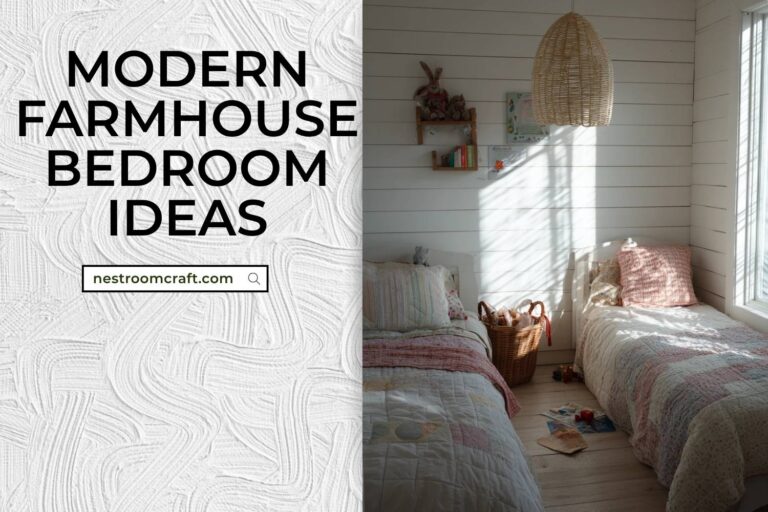
Bedroom lighting ideas can change how your room feels in the morning and at night. The right light helps you read, relax, work, and wake up without harsh glare.
This guide shares simple lighting setups based on real-life bedroom moments: a morning reading nook, an evening bedside lamp, a child’s nightlight, and more. You will see how to use sunlight through sheer curtains, warm amber lamps, and soft shadows from plants and blinds.
Each section includes easy styling tips, a Pro Design Tip, and a Budget Consideration so you can get the look without overdoing it. Use these ideas to save your favorite look on Pinterest, then set up your own room step by step.
Whether you have a studio bedroom, a family home, or a small corner workspace, these lighting ideas focus on comfort, function, and a calm mood.
1. Morning Reading Nook Lighting with Sheer Curtains


A morning reading nook works best when you use natural light as the main source. Mid-morning sunlight through sheer curtains gives a soft golden glow that feels calm and easy on your eyes. Place your bed or chair so the light comes from the side, not straight in front of you, so you avoid squinting and screen-like glare on your book pages.
To copy the look, keep the bedding light and textured, like linen, so the sun makes gentle highlights. A slightly rumpled duvet is fine because it looks lived-in and cozy. Add a small bedside table with a coffee mug and a simple lamp for cloudy days. A potted fern or leafy plant is a smart styling trick because it casts pretty shadows on the wall and adds a fresh, quiet feeling.
When the sun gets stronger, you can layer two window treatments. Use sheers for glow, then add a simple roller shade or drape you can pull halfway down. This keeps your reading nook bright but not hot. If you like taking photos for Pinterest, warm textures like wood, linen, and a matte ceramic mug help the scene look soft and real.
- Hang sheer curtains a little wider than the window so more light spreads into the room.
- Use a warm white bulb (about 2700K) in a small bedside lamp for backup light.
- Set the lamp on the far side of the nightstand so it does not bump your book or mug.
- Add one plant near the window to create gentle shadows and depth.
- Use light bedding colors to reflect sunlight and brighten the whole bed area.
Pro Design Tip: Use a dimmable lamp with a fabric shade so you can match the soft morning light when the sun is hidden.
Budget Considerations: Sheer curtain panels and a plug-in dimmer are low-cost upgrades; you can also thrift a small table lamp and add a new shade.


2. Evening Bedside Lamp Warmth in a Studio Bedroom


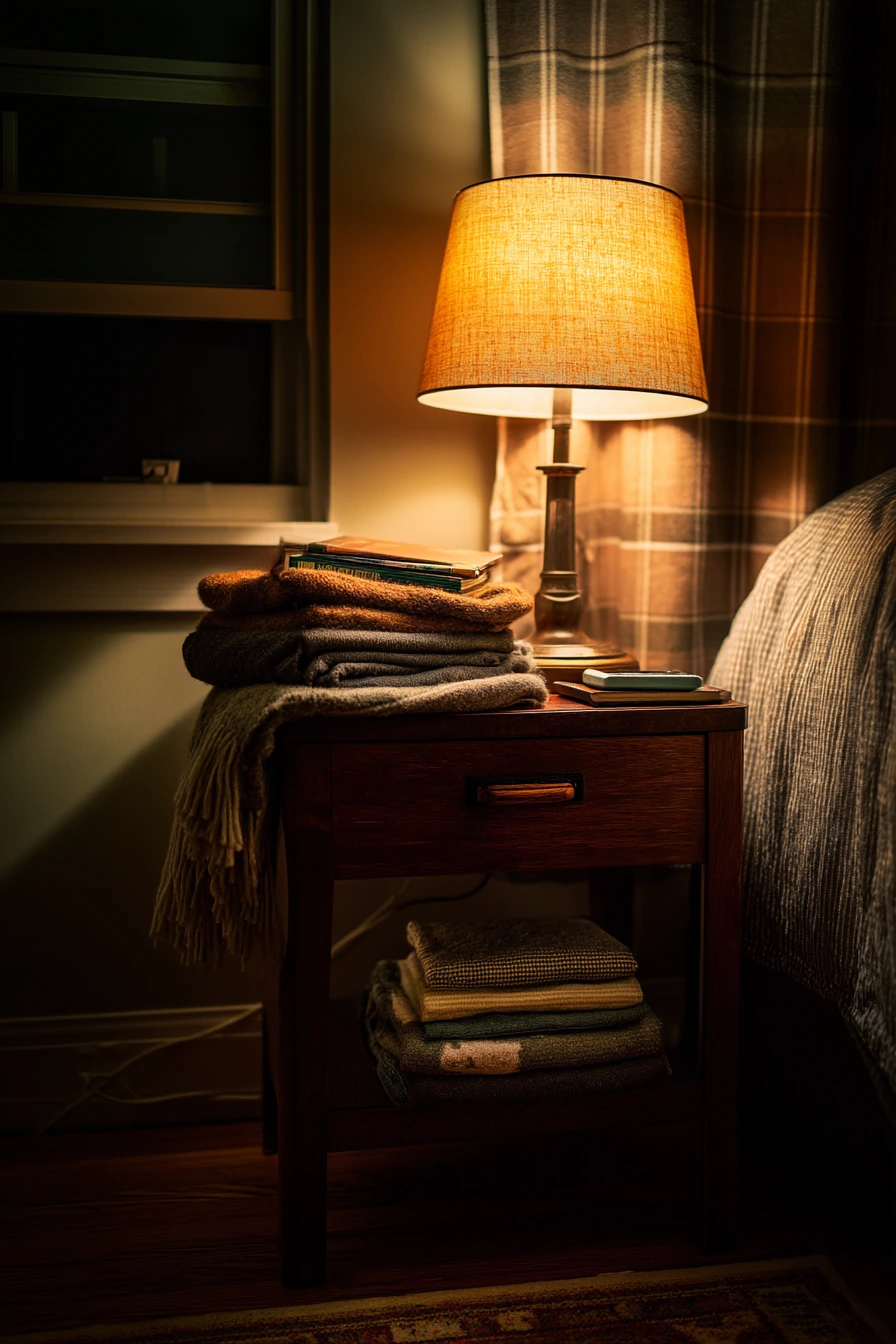
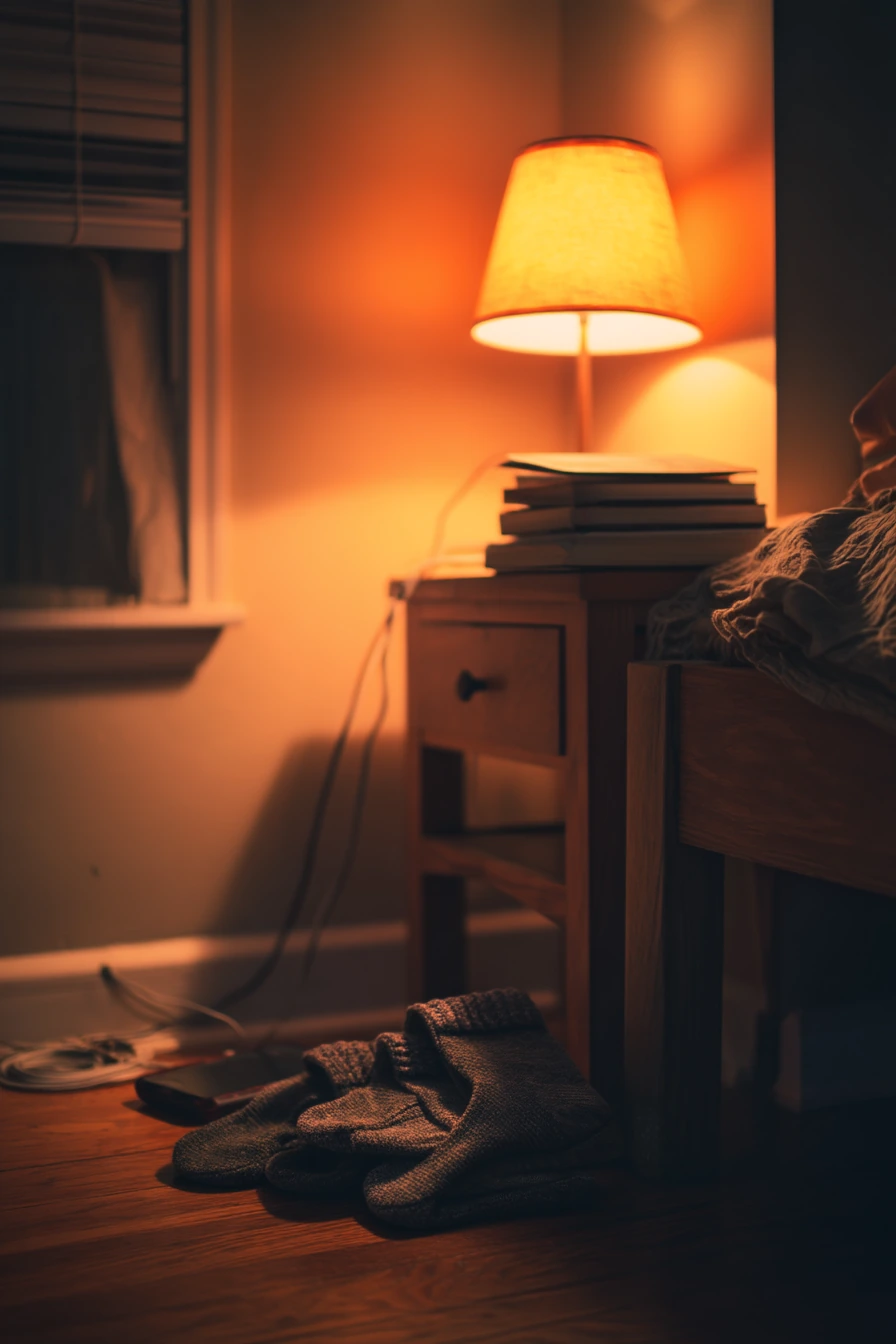
In a small studio bedroom, one warm amber bedside lamp can do a lot. It makes the space feel close and calm, and it helps you wind down. A lamp placed near a stack of novels creates a clear “night routine” spot. It also keeps the rest of the room darker, which supports sleep.
To style this look, keep the nightstand simple but useful: phone charger, a couple of books, and a small tray for keys or earbuds. The lived-in details matter. A throw blanket casually draped and socks on the hardwood floor make the room feel real, not staged. Lighting should still feel tidy, so hide cords behind the nightstand or use adhesive clips along the back edge.
If you want a cozy feel without making the room too orange, choose a bulb that is warm but not too dim. A warm white bulb can still be soft if you use a shade that diffuses the light. If you share the room with a work desk, keep the bedside lamp as the “relax light” and avoid turning on bright overhead lighting late at night.
- Choose a bedside lamp with a shade that points light downward for reading.
- Use a bulb around 2200K to 2700K for a warm amber tone.
- Add a soft throw with texture to help the light look warmer.
- Keep a small book stack to anchor the scene and suggest calm time.
- Use one small accent light, not many, to avoid visual clutter in a studio.
Pro Design Tip: Pick a lamp with a dimmer so you can start brighter for reading and lower it for a calm end-of-day glow.
Budget Considerations: A thrifted lamp base can look new with a simple linen shade; LED warm bulbs cost more upfront but save money over time.
3. Child Bedroom Nightlight Ideas with a Moon Glow
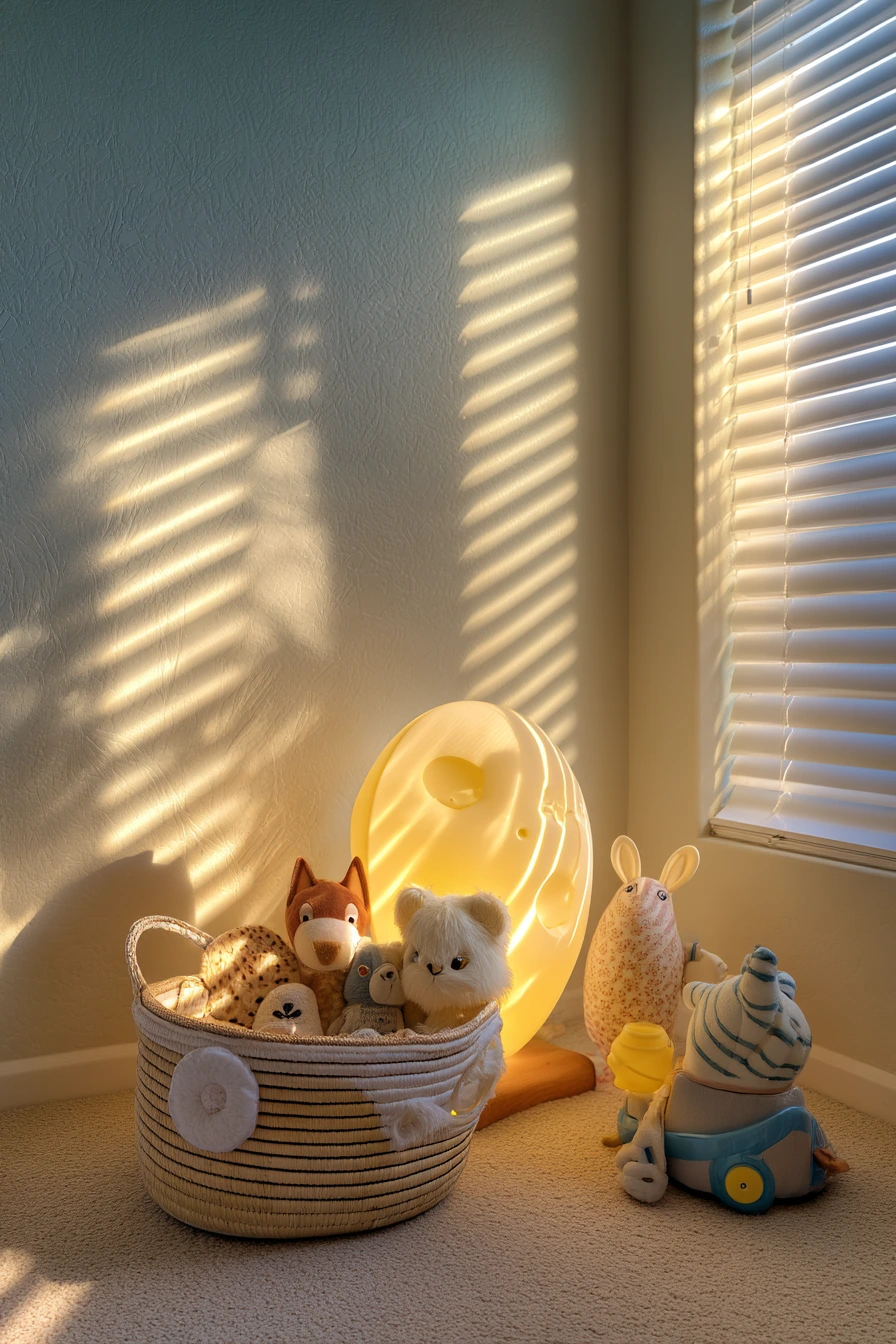

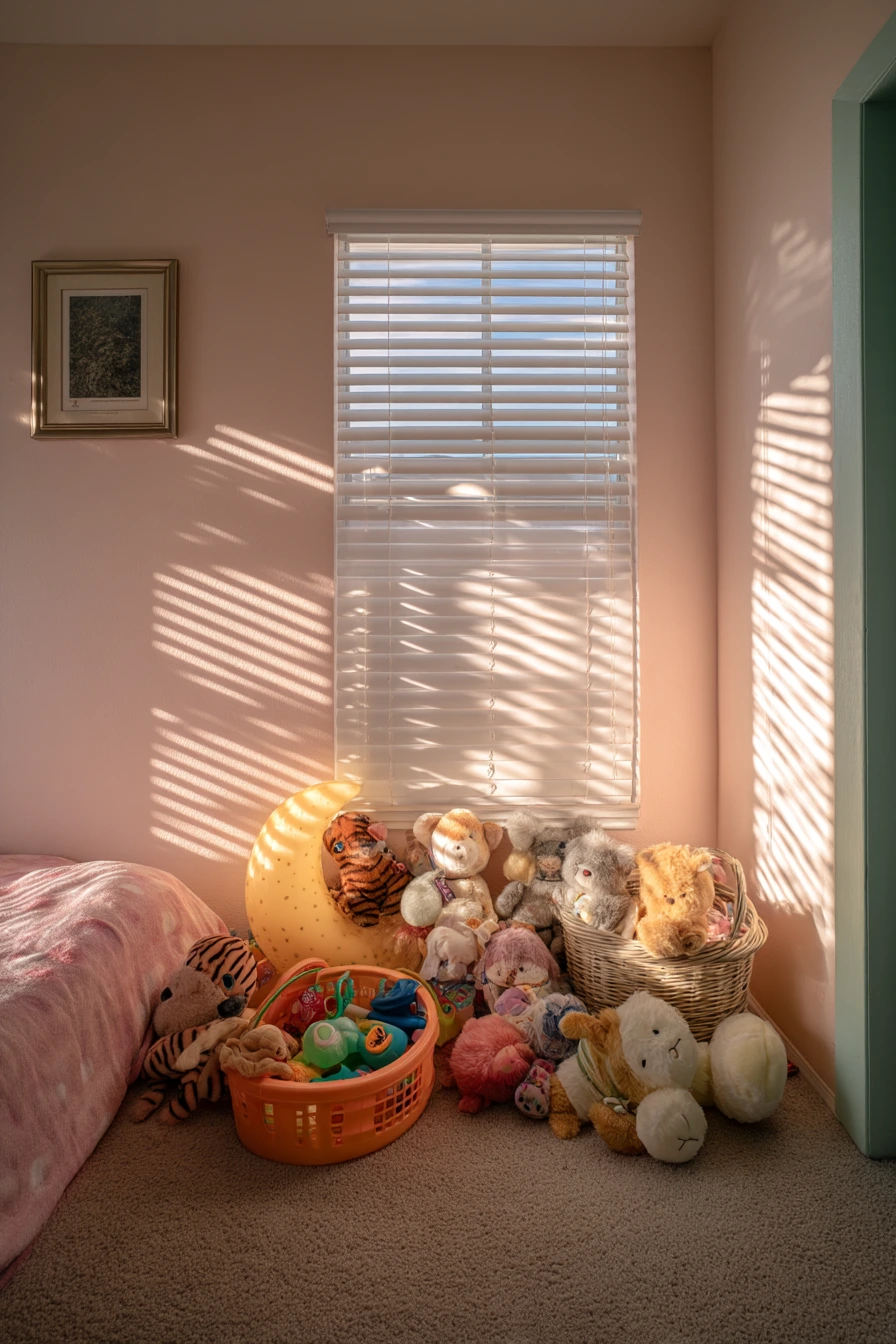
A child’s bedroom lighting ideas that feels safe but still supports sleep. A moon-shaped nightlight gives a gentle glow that helps toddlers settle without lighting up the whole room. This kind of lighting also makes nighttime wake-ups easier for parents because you can see enough to check on your child without turning on bright overhead lights.
Pastel walls and soft textures work well with warm, low light. If you have afternoon sunlight through blinds, you can use it as a daytime “play light.” The striped shadows from blinds add interest on the wall, so you do not need a lot of wall decor. Keep the light sources simple: one overhead fixture for cleaning and getting dressed, one nightlight for sleep, and one small lamp if you read stories.
For styling, gather stuffed animals into a few zones instead of spreading them everywhere. Use a basket that is easy to reach, even if it gets tipped sometimes. Place the nightlight near the bed but not where small hands can pull cords. If the room feels too bright at bedtime, add blackout curtains behind the main drapes so naps and early mornings stay calm.
- Choose a nightlight that is warm and dim, not bright white.
- Place the nightlight low on a dresser or use a wall plug-in version.
- Use blackout curtains if streetlights or early sun disrupt sleep.
- Keep one soft lamp for bedtime stories, then switch to the nightlight.
- Use storage baskets to reduce clutter so the room feels calmer at night.
Pro Design Tip: Use a nightlight with an amber LED and a timer, so it turns off after your child falls asleep.
Budget Considerations: Plug-in nightlights are affordable; if you already have a lamp, swap the bulb to a lower-lumen warm LED instead of buying a new fixture.

4. Couple Bedroom Morning Light with Soft White Curtains


For a couple’s lazy morning setup, the goal is soft, even daylight. Diffuse sunlight through soft white curtains makes the room bright without sharp shadows. It also flatters the space when you are lounging with a laptop or enjoying breakfast on a tray. This lighting feels peaceful and keeps the room from looking harsh, even with mid-century modern lines and wood tones.
To style the bed, lean into natural textures like linen sheets and a light quilt. Slightly rumpled bedding looks comfortable and matches the “slow morning” mood. Add a water glass on each side and a simple plant on the windowsill to bring life into the scene. If you use a laptop in bed, place it so the window is to the side. This reduces reflections on the screen and makes it easier to see.
Layer your lighting so the room works past morning. Use soft overhead light on a dimmer for general use, then add two bedside lamps for evenings. Matching lamps are not required, but similar shade color helps the room feel balanced. If you want a clean look for photos, keep cords hidden and choose warm bulbs so nighttime light still feels calm.
- Use sheer or semi-sheer curtains to spread morning light across the room.
- Place the bed so daylight hits the side, not straight at your face.
- Add bedside lamps with fabric shades for softer evening light.
- Use a tray with simple items to keep breakfast-in-bed tidy.
- Put a small plant on the windowsill to soften the room and add color.
Pro Design Tip: Install a dimmer on your main ceiling light so the room can shift from bright morning to soft evening without changing fixtures.
Budget Considerations: Ready-made curtain panels and a basic dimmer switch are cost-friendly; if wiring is not possible, use plug-in lamps with dimmable bulbs.


5. Bedroom Desk Lamp Ideas for a Cozy Corner Workspace

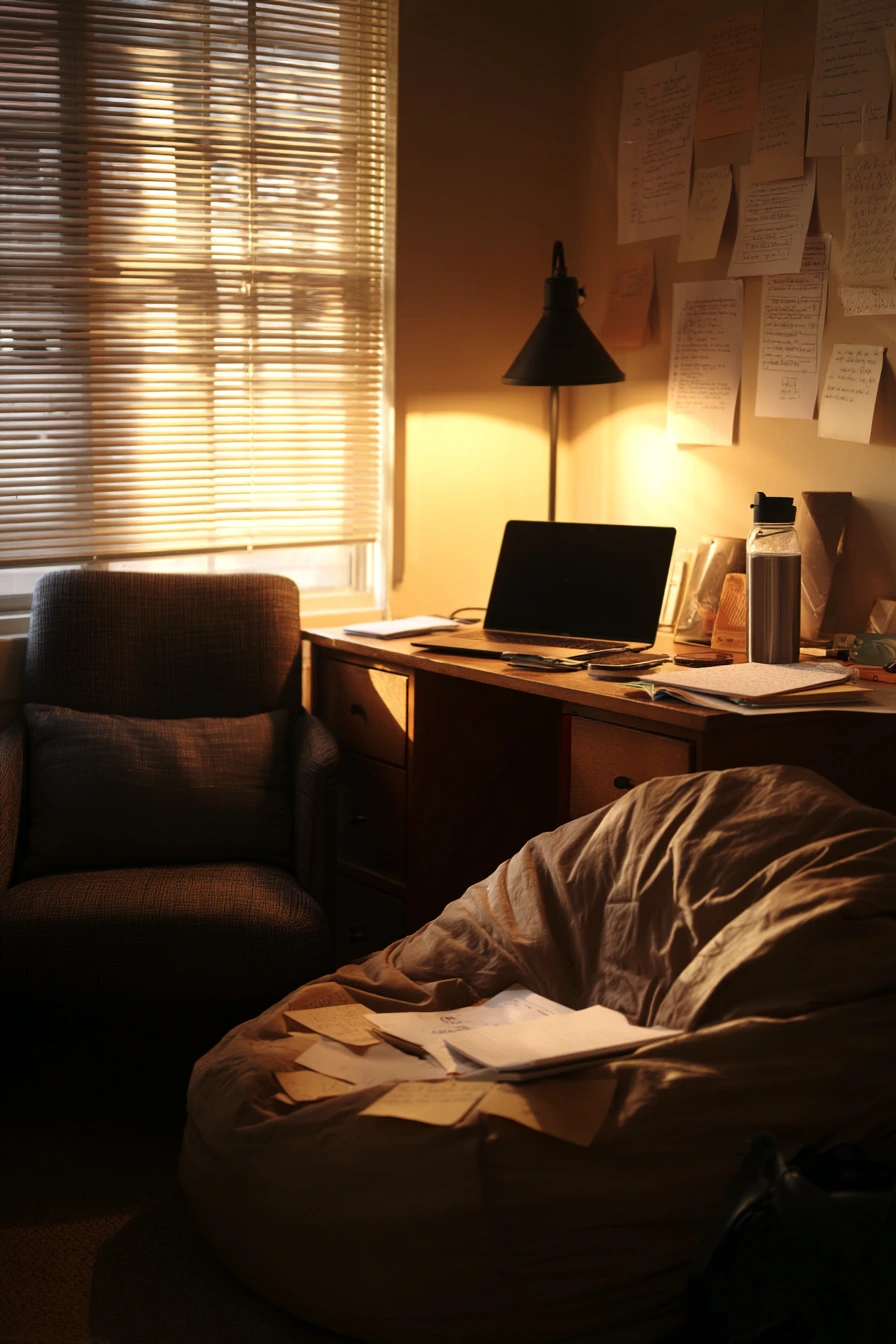
A cozy corner workspace needs focused light that does not take over the whole bedroom. A desk lamp that casts a warm pool of light helps you stay on task while keeping the rest of the room calm. This is useful for students who study at night and want their bed area to still feel restful.
Start with placement. Put the desk near a wall or in a corner so the lamp light has a clear target. If you are right-handed, place the lamp on the left side to reduce shadows on your notes. If you are left-handed, do the opposite. Keep the lamp shade opaque so the light does not shine into your eyes. Add small styling touches that make the space feel lived-in: scattered notes (but not a mess), a water bottle, and a soft beanbag with a wrinkled throw for short breaks.
During the day, blinds can bring in sunlight in thin lines. If that striped light hits your screen, tilt the blinds up or down until the glare goes away. At night, avoid using very cool bulbs because they can feel like office lighting. Warm light still works for studying if it is bright enough. Use higher lumens with a warm color temperature for comfort.
- Choose an adjustable desk lamp so you can aim the beam at your work.
- Use a warm bulb (2700K to 3000K) with enough brightness for reading notes.
- Position the lamp to reduce hand shadows on paper.
- Keep one soft accent light in the room so the desk is not the only bright spot.
- Use cable clips to keep charging cords and laptop wires neat.
Pro Design Tip: Use two layers at night: a bright desk lamp for tasks and a softer lamp across the room to reduce eye strain from high contrast.
Budget Considerations: A basic clamp lamp works well if space is tight; upgrade later with an LED bulb that is bright but warm.


6. Bedside Lamp Lighting for Journaling and Reflection


A bedside reflection setup is about calm, close light. A warm bedside lamp on a wooden table makes journaling feel steady and personal. It lights the page clearly while keeping the rest of the bedroom dim, which helps your mind slow down. This is a good routine for early morning or before sleep.
To style it, keep a journal open with a pen nearby so you can sit down and start right away. Add a cozy knitted throw draped over the bed edge for texture. If you have gauzy curtains, morning light will filter in softly and mix with the lamp light. That blend looks gentle and makes the room feel warm without being too bright.
Make the setup practical. Use a small tray or bowl for rings and small items so the table stays uncluttered. If you drink tea or keep water nearby, choose a stable mug and keep it on a coaster to protect the wood. If you like plant shadows on the wall, place a small plant near the window or on a dresser where it catches light without blocking your walking path.
- Use a lamp shade that diffuses light to reduce glare on the page.
- Pick a bulb that is warm and flicker-free for comfortable reading.
- Keep a coaster and a small tray on the nightstand for easy order.
- Add one textured throw to make the corner feel inviting.
- Angle the lamp so light falls across the journal, not directly into your eyes.
Pro Design Tip: Choose a lamp with a wide shade opening at the bottom so the light reaches your hands and paper without needing a brighter bulb.
Budget Considerations: You can refresh an old lamp with a new shade; a simple warm LED bulb and a secondhand wooden table keep costs down.


7. Minimalist Hygge Bedroom Lighting with Soft Window Light


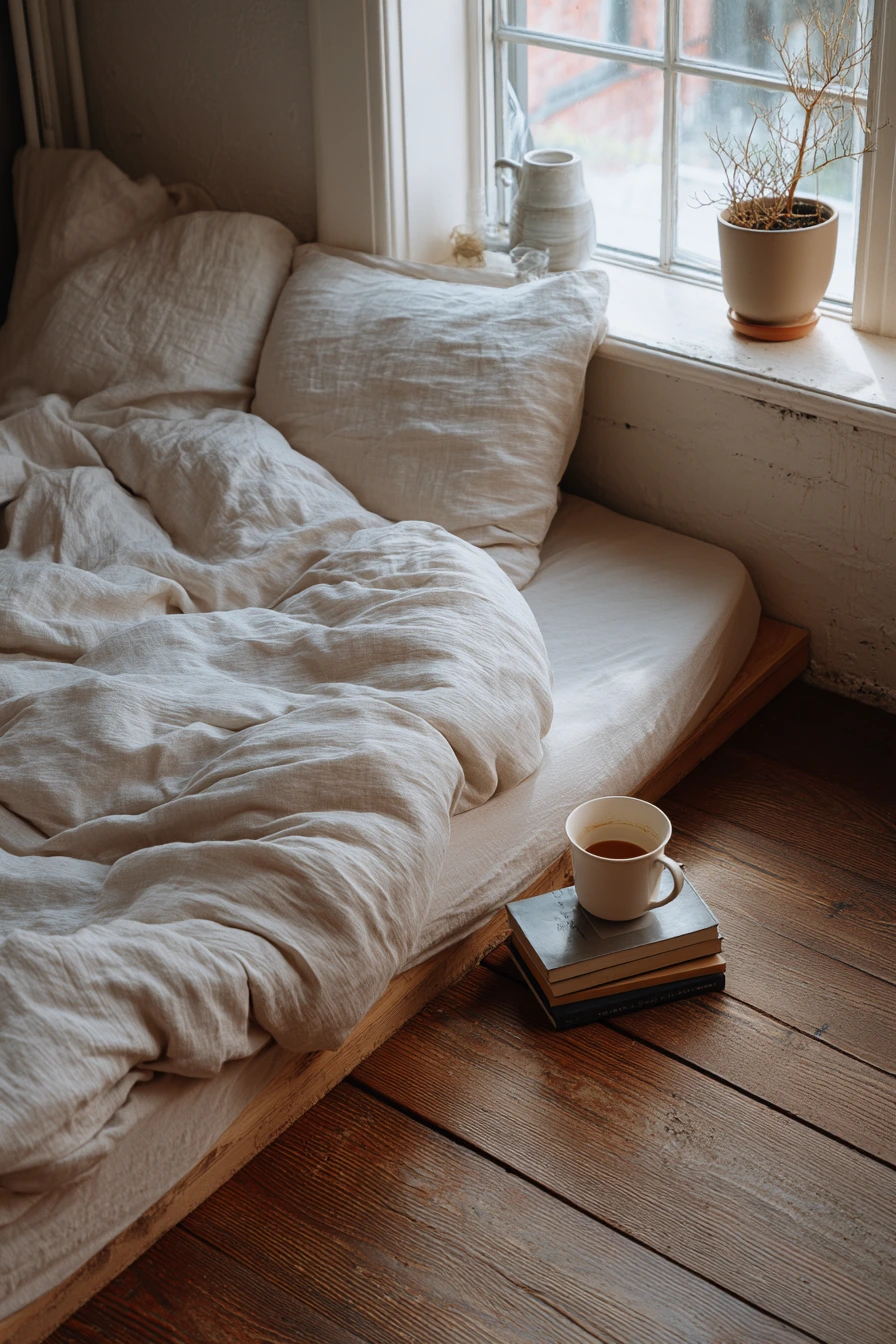
A minimalist hygge bedroom depends on soft window light and a few warm accents. In a Scandinavian-inspired room, a low platform bed and linen bedding look best when daylight fills the space evenly. The goal is not dramatic lighting. It is a calm, sun-drenched feel that makes the room easy to live in.
Start by keeping the window area clean. Avoid heavy patterns and choose light, simple curtains or shades that still let light in. Warm wooden floors reflect sunlight and help the room feel brighter. Styling should be minimal but cozy: a mug of tea on the bedside table, a small stack of books, and one tiny potted plant near a corner. These items give the room warmth without adding clutter.
At night, keep lighting low and layered. One bedside lamp or a pair of small lamps works well. Use warm bulbs so the room still feels soft. If you do not want lamps on the table, wall-mounted sconces free up space and keep the look clean. The key is to avoid strong overhead light as your main source in the evening.
- Use light-colored curtains to keep daylight soft and even.
- Choose warm bulbs for evening light to match the hygge mood.
- Keep bedside decor simple: books, a mug, and one small plant.
- Add a small lamp with a linen shade to keep the look natural.
- Use warm wood or woven textures to help light feel softer.
Pro Design Tip: Stick to one bulb color temperature across the room so the light feels consistent and calm.
Budget Considerations: Linen bedding can be pricey; use cotton sheets and add one linen pillow cover for the look while keeping costs lower.

8. Warm Floor Lamp Lighting for Evening Relaxation

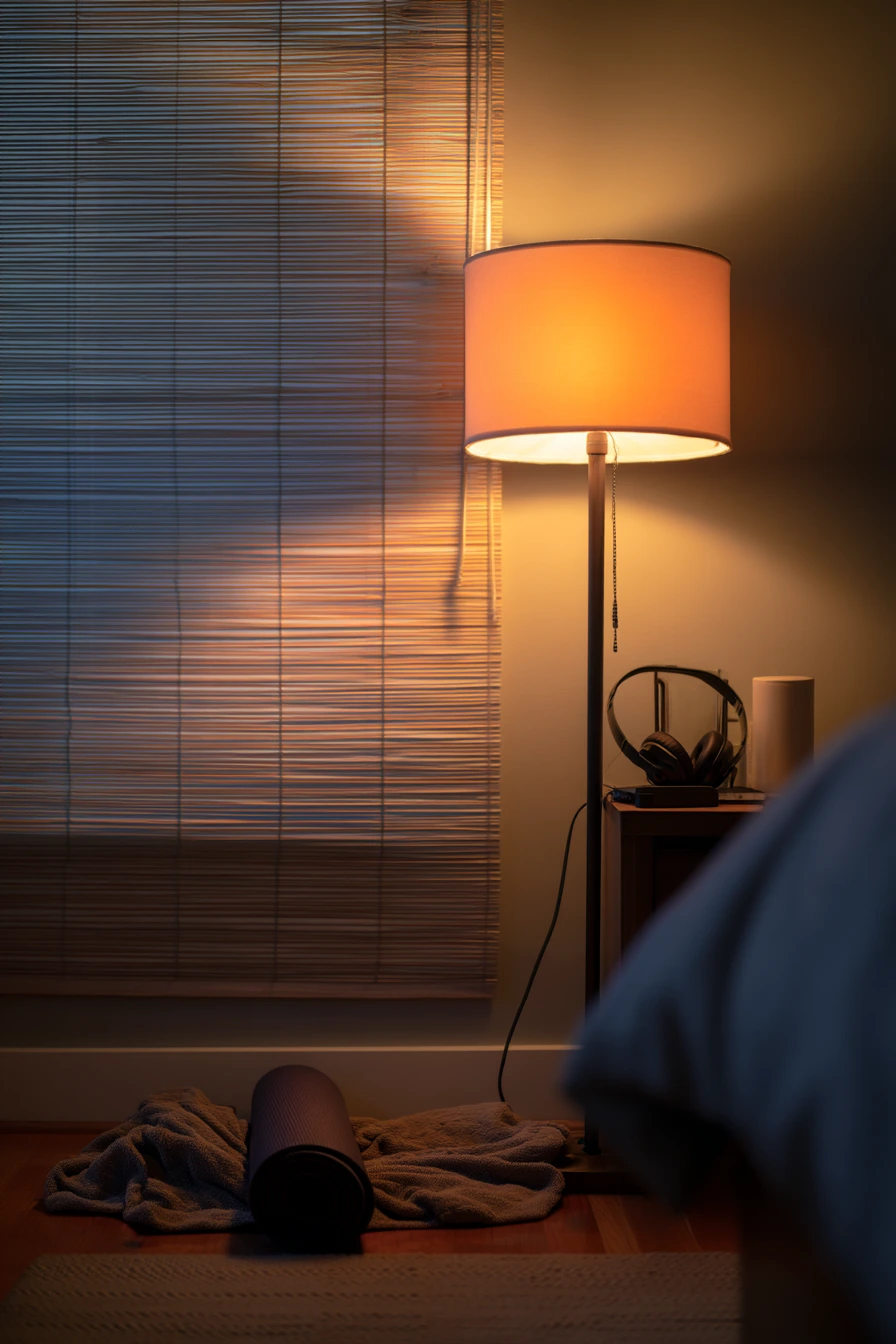
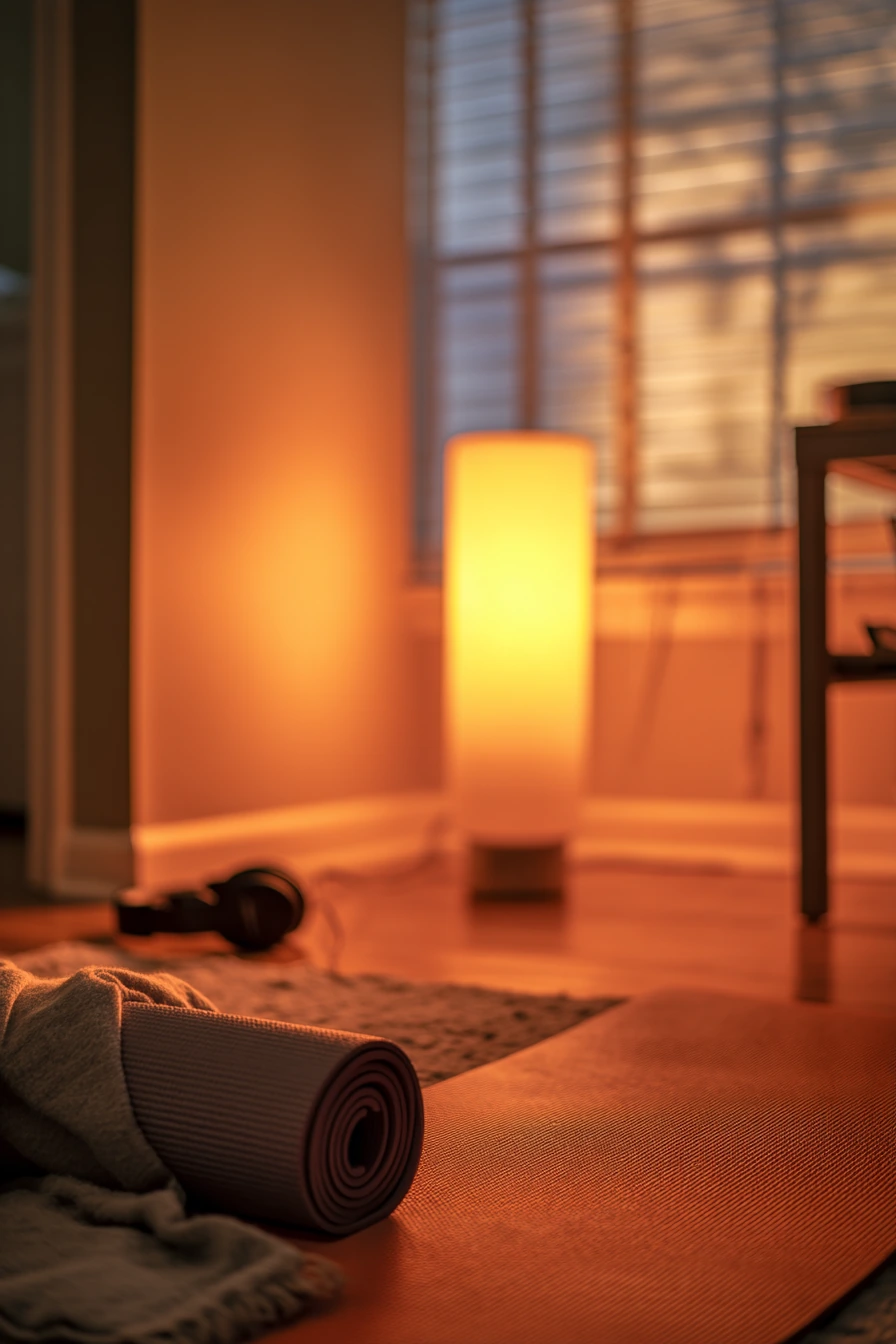
Evening relaxation lighting should help your body shift into rest mode. A warm amber floor lamp is a strong choice because it spreads light upward and across the wall, not straight into your eyes. This creates soft shadows and a quiet mood, especially when twilight light comes through blinds.
Style this setup like a small wind-down corner. A yoga mat rolled in the corner and headphones on the nightstand suggest a simple routine. Add a wrinkled throw tossed over a chair or the bed for texture. Keep the floor lamp near a wall so it can bounce light and make the room feel larger. If you have one bright overhead fixture, keep it off in the evening and use the floor lamp as your main light.
For function, pick a lamp height that lights the room without shining directly at eye level when you sit in bed. If you watch TV or scroll on your phone, warm side lighting is easier on your eyes than a bright ceiling light. You can also pair the floor lamp with a small bedside lamp on a low setting for a balanced glow.
- Place a floor lamp near a wall to spread light and soften shadows.
- Use a warm bulb to create a relaxed, amber tone.
- Keep the corner simple with one or two self-care items like a yoga mat.
- Use a throw blanket to add texture that catches the light.
- Turn off overhead lights at night to avoid harsh brightness.
Pro Design Tip: A floor lamp with an uplight shade can make ceilings look higher and help a small bedroom feel more open.
Budget Considerations: Many floor lamps are affordable; if you already own one, upgrade the bulb to a warmer, dimmable LED for a better mood.

9. Romantic Bedroom Lighting with String Lights and Warm Lamps
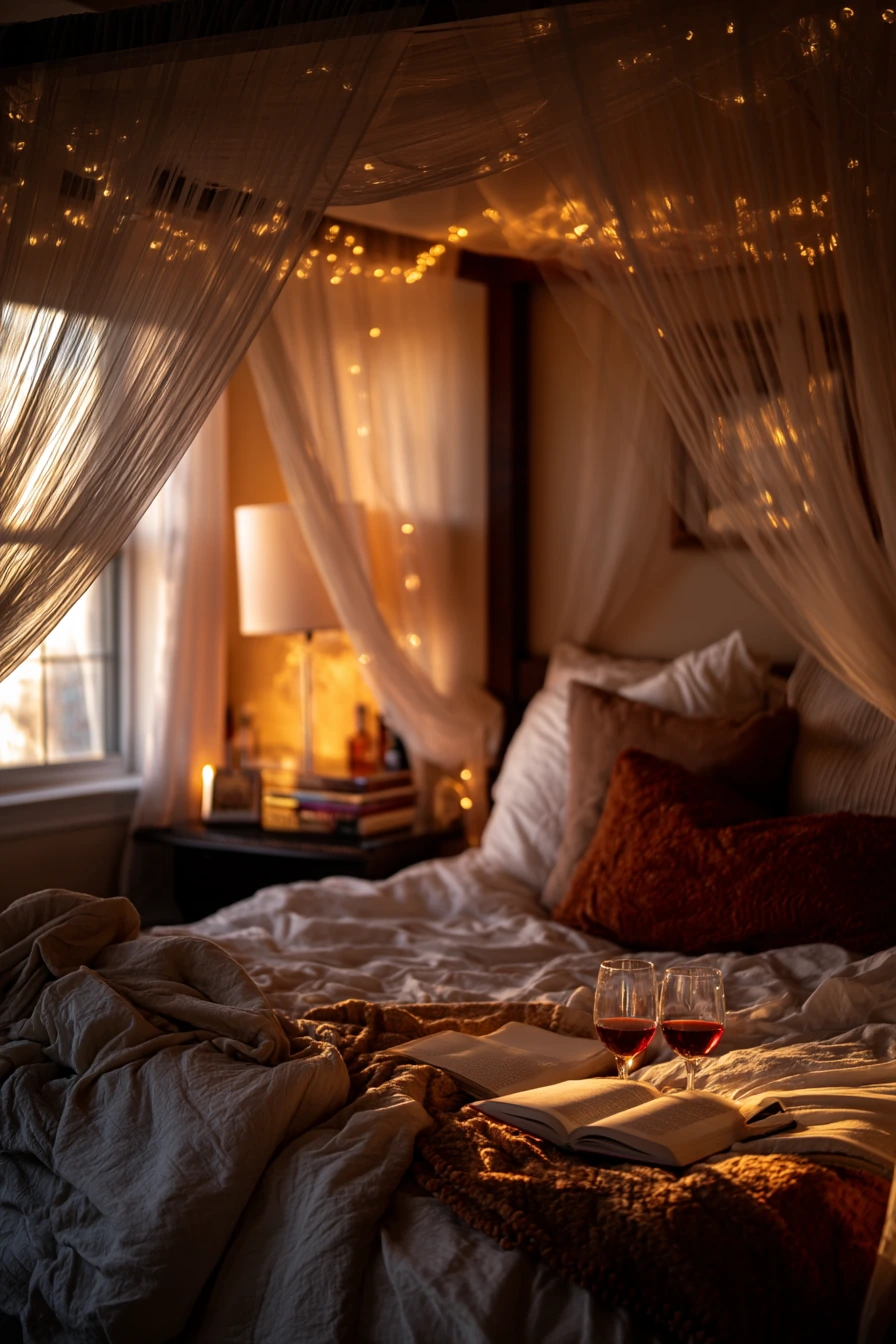

Romantic bedroom lighting is about soft layers, not bright spots. String lights around a canopy bed add a gentle twinkle that feels warm and close. Pair them with a bedside lamp so you have enough light for real use, like reading an open book or setting down glasses of wine safely.
To keep the room from looking messy, use string lights as a frame. Run them along the canopy lines or around the headboard so they look intentional. Choose warm white lights, not cool white. Keep the bedding cozy and textured, and do not worry if it looks a little disheveled. That relaxed look fits the mood. Add one or two items on the nightstand, like a book and a small tray, so the surface still feels organized.
Dusk light from a window can mix with warm lamplight and make the room feel soft. If your room faces streetlights, use thicker curtains so the outside light does not compete with your string lights. For safety, make sure cords are secured and never run under rugs where they can overheat or trip someone.
- Use warm white string lights to avoid a harsh, blue tone.
- Frame the bed with lights so they look neat, not tangled.
- Add a bedside lamp for practical light and balance.
- Use a tray on the nightstand for glasses and small items.
- Layer curtains to control outside light during the evening.
Pro Design Tip: Put string lights on a timer so they turn on before bedtime and turn off later without you getting up.
Budget Considerations: Plug-in string lights are low-cost; if you want a cleaner look, spend more on a set with a thin wire and warm LEDs.


10. Bright Morning Bedroom Lighting for a Creative Studio Feel


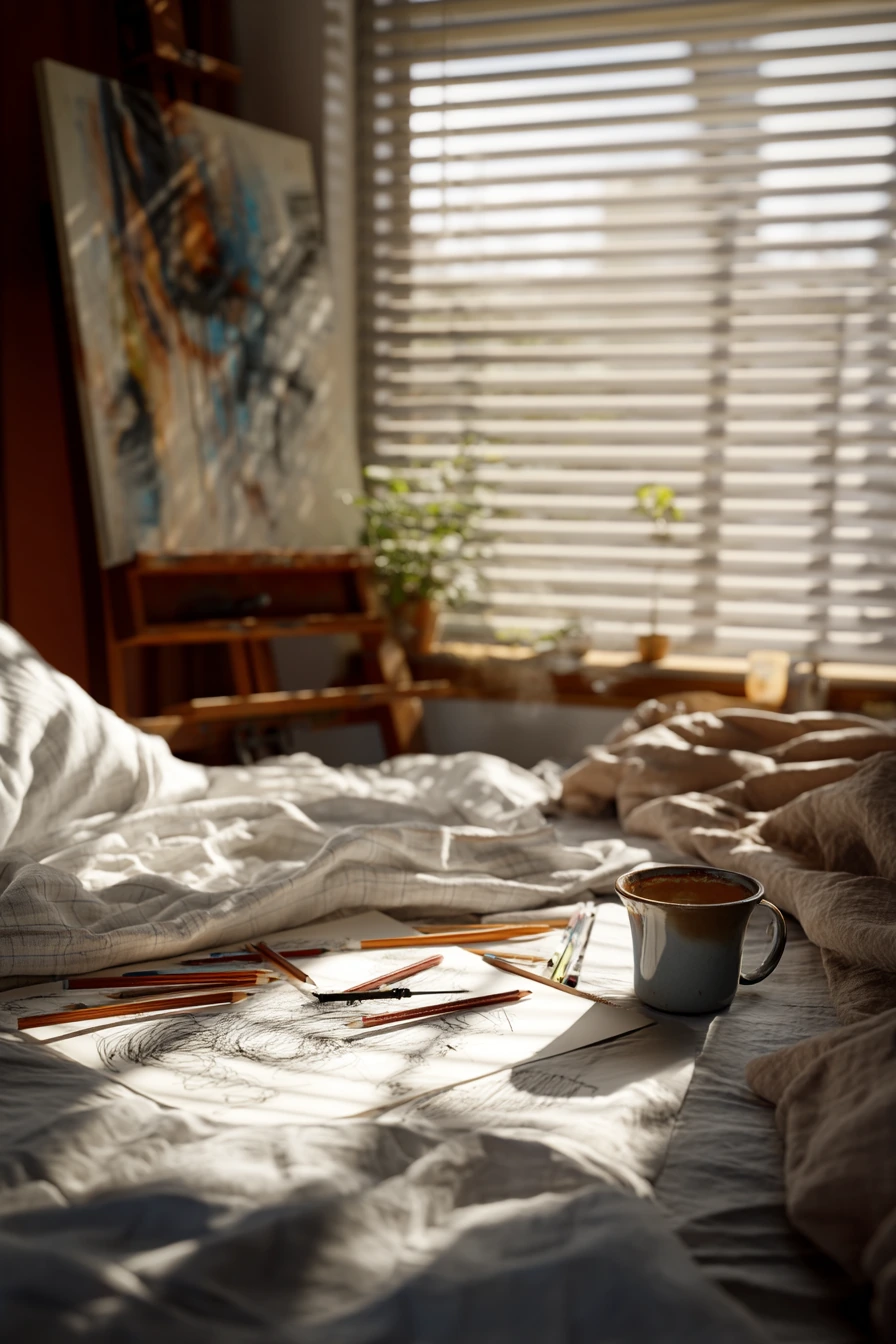
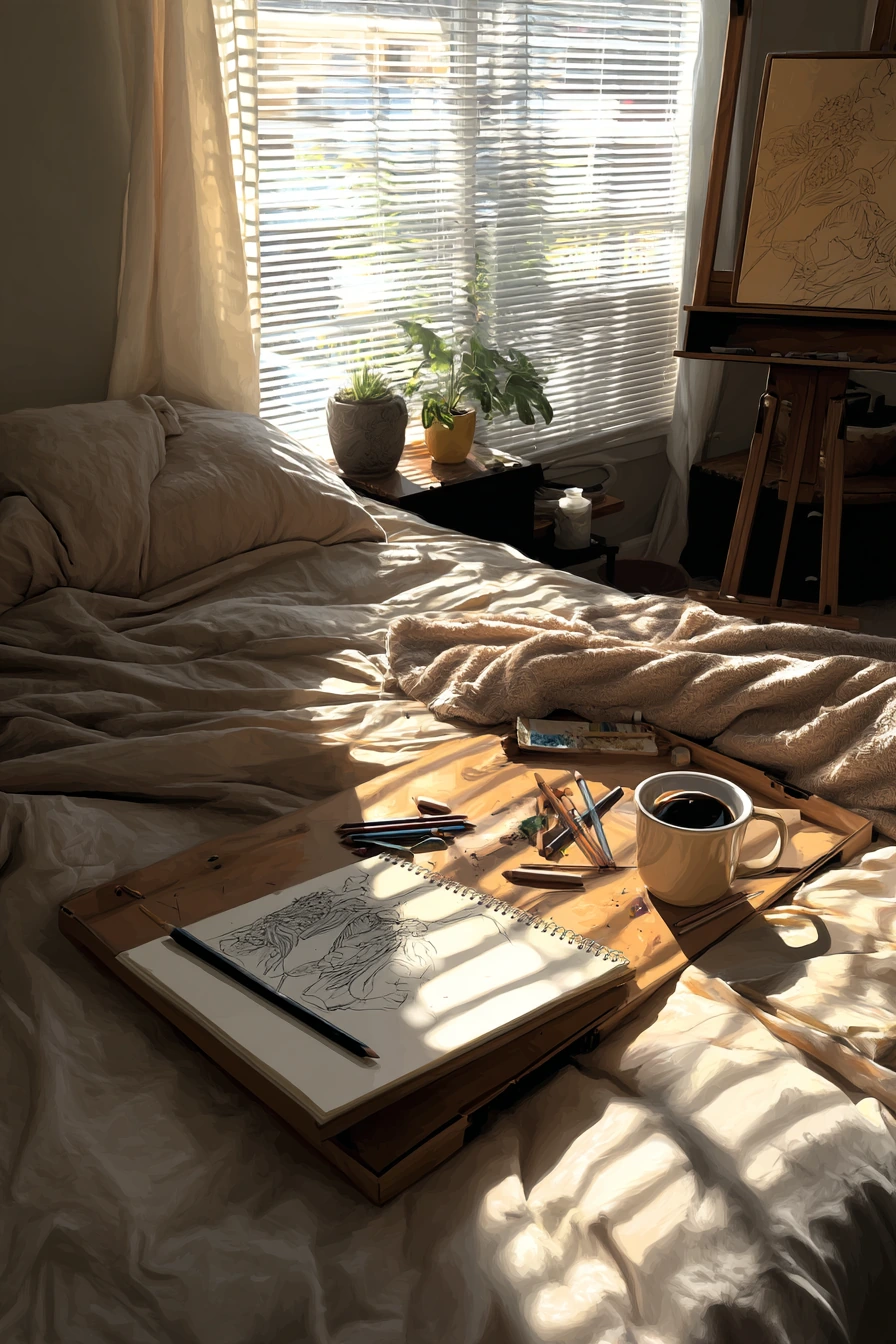
A creative morning studio look depends on strong natural light that still feels warm. Sunlight streaming diagonally through blinds can make your room feel awake and focused. It also creates clear lines of light and shadow that look great on a sketchpad, pencils, and textured linen throws.
To style this scene, keep creative tools easy to grab. Leave a sketchpad on the bed, place pencils in a cup or small tray, and keep a coffee mug nearby. Add an easel in the corner if you have space. The room should feel like you can start making something right away. A small potted plant on the windowsill adds life and softens the hard lines from the blinds.
For good lighting all day, think in layers. Use daylight for morning work, then switch to a task lamp when the sun moves. If you take photos for Pinterest, keep the color temperature consistent. Warm bulbs blend better with morning light than cool bulbs. Also, manage glare by adjusting blinds so the stripes do not hit your eyes or your drawing surface directly.
- Angle blinds so sunlight hits the bed area without blinding you.
- Use a small task lamp for cloudy days or late afternoon sketching.
- Keep supplies in a tray to look tidy but still creative.
- Add a plant on the windowsill to soften the light pattern.
- Choose warm bulbs so nighttime creativity still feels cozy.
Pro Design Tip: Use a high-CRI LED bulb in your task lamp so colors in art and fabric look more true to life.
Budget Considerations: A basic desk lamp with a quality bulb can replace a pricey art light; a thrifted tray can organize pencils and tools for little cost.
Good bedroom lighting comes from layers: daylight, a soft main light, and smaller lamps where you need them. Start with one change, like a warm bedside lamp or better curtains, and build from there.
Use these bedroom lighting ideas to match your routine, whether you read in the morning, study at night, or want a calmer space for sleep. Small choices like bulb warmth, lamp placement, and simple styling can make your room feel more comfortable every day.
FAQ
1. What is the best lighting for a bedroom?
A mix of daylight, soft main light, and smaller lamps works well in a bedroom.
2. What color temperature is good for a warm bedroom light?
Warm bulbs around 2700K can create a soft and cozy bedroom feel.
3. How can I make my bedroom lighting feel cozy?
Use warm bedside lamps, soft curtains, warm bulbs, and gentle accent lights.
4. What lighting is best for reading in bed?
A bedside lamp with a shade that directs light downward can provide useful reading light.
5. How can I improve lighting in a small bedroom?
Use natural window light during the day and layered warm lighting at night. A floor lamp near a wall can also help spread light around the room.