Rock garden ideas are a smart way to add texture and color with less watering and less mowing. You can build one in a small backyard corner, along a wall, or right inside a patio edge.
This guide walks you through 10 photo themes, from moss-covered stones and winding gravel paths to dry-climate cactus beds and cozy lantern lighting. Each section includes simple styling steps you can copy.
You will learn how to pick rocks, place gravel, choose plants like succulents, ivy, ferns, and ornamental grasses, and add small details that make the space feel lived-in. The tips work for renters and homeowners.
Use these rock garden layouts to plan your own weekend project, save money on upkeep, and create a calm spot that looks great in photos and in real life.
1. Rock Garden Idea: Moss Stones, Gravel Paths, and Bonsai Clusters
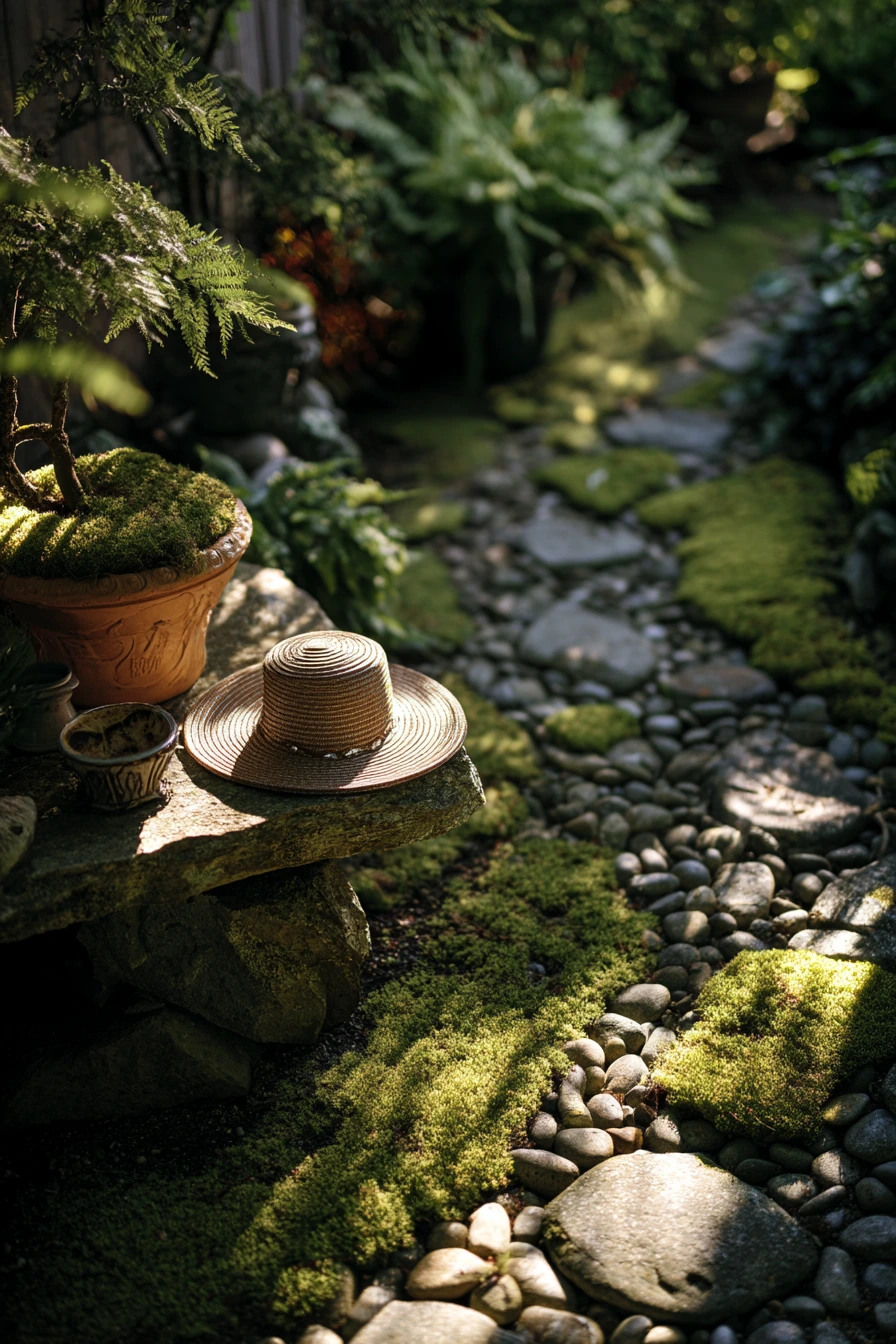

This rock garden idea focuses on soft textures and calm lines. Moss-covered stones make the space feel older and more natural, while a winding gravel path gives you a clear route to walk and weed. Bonsai clusters work well here because they stay small and look good from a low angle, especially in morning light.
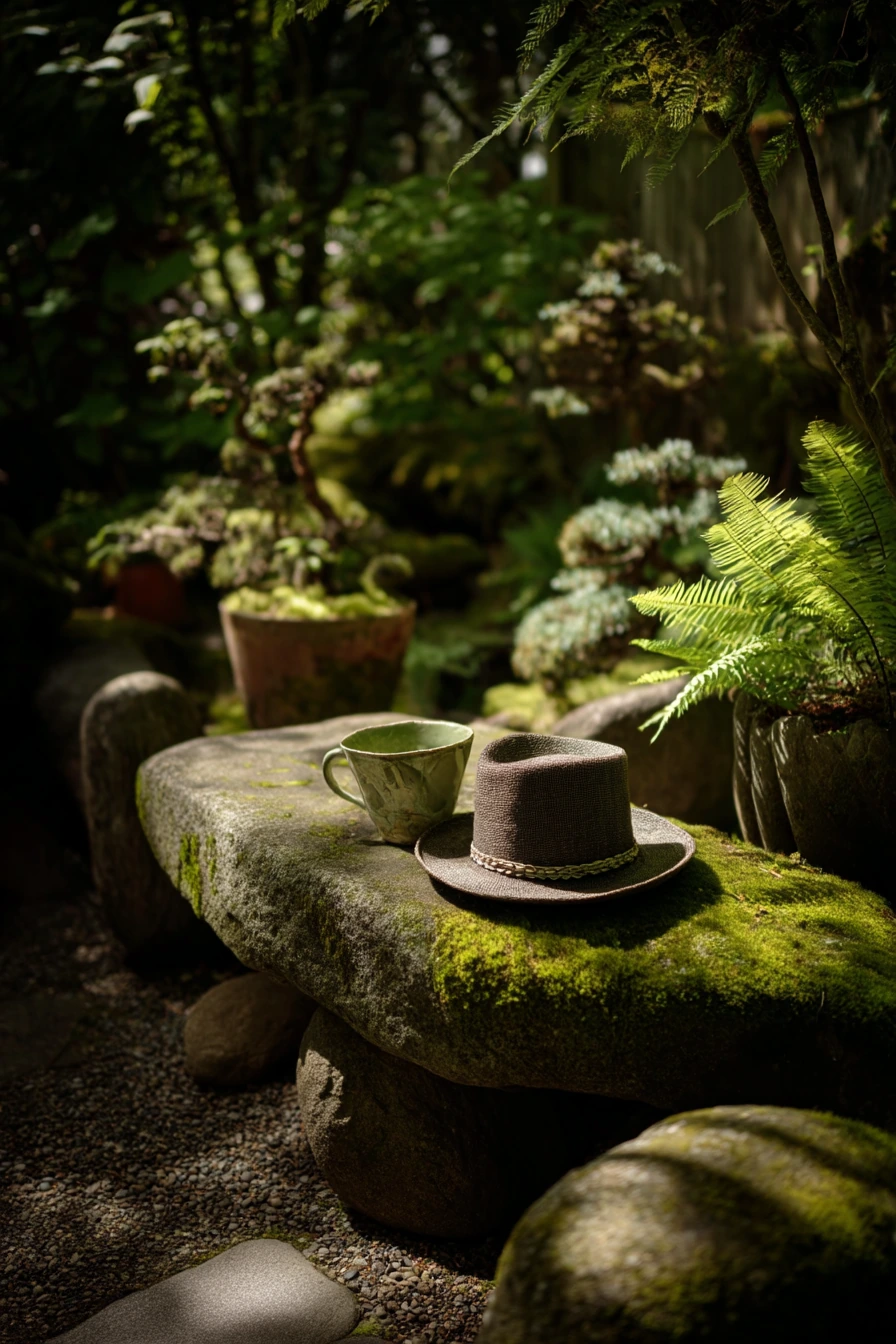
Start with a simple plan: one main path, two or three “islands” of stones, and small planting pockets between rocks. Use mixed gravel sizes so the path does not look flat. Add a stone bench or a low seat so the garden feels like a place to pause. Small items like a ceramic teacup and a garden hat are not just for photos. They also suggest how you will use the space, which makes the layout feel welcoming.
Keep plant choices tight so the garden does not turn into a messy mix. Moss, small ferns in pots, and a few bonsai-style shrubs create a clean look. If moss will not grow in your yard, try shade groundcovers that stay low. Aim for dappled light by placing the garden near potted ferns or under light tree cover.
- Lay landscape fabric under gravel to slow weeds, then cover it well so it does not show.
- Use 2–3 rock sizes: one large anchor stone, medium border stones, and small pebbles for fill.
- Curve the path gently and keep it at least two feet wide for easy walking.
- Group bonsai or dwarf shrubs in odd numbers (3 or 5) for a natural look.
- Add one “resting spot” like a stone bench, then style it with one simple item.
Pro Design Tip: Place your largest stone first and build the whole layout around it; it acts like a focal point and keeps the design from looking scattered.
Budget Considerations: Buy mossy stones locally to avoid delivery fees, or use regular stones and add low-cost groundcover to get a similar soft look over time.

2. Small Backyard Rock Garden with Tiered Stones, Succulents, and a Mini Waterfall
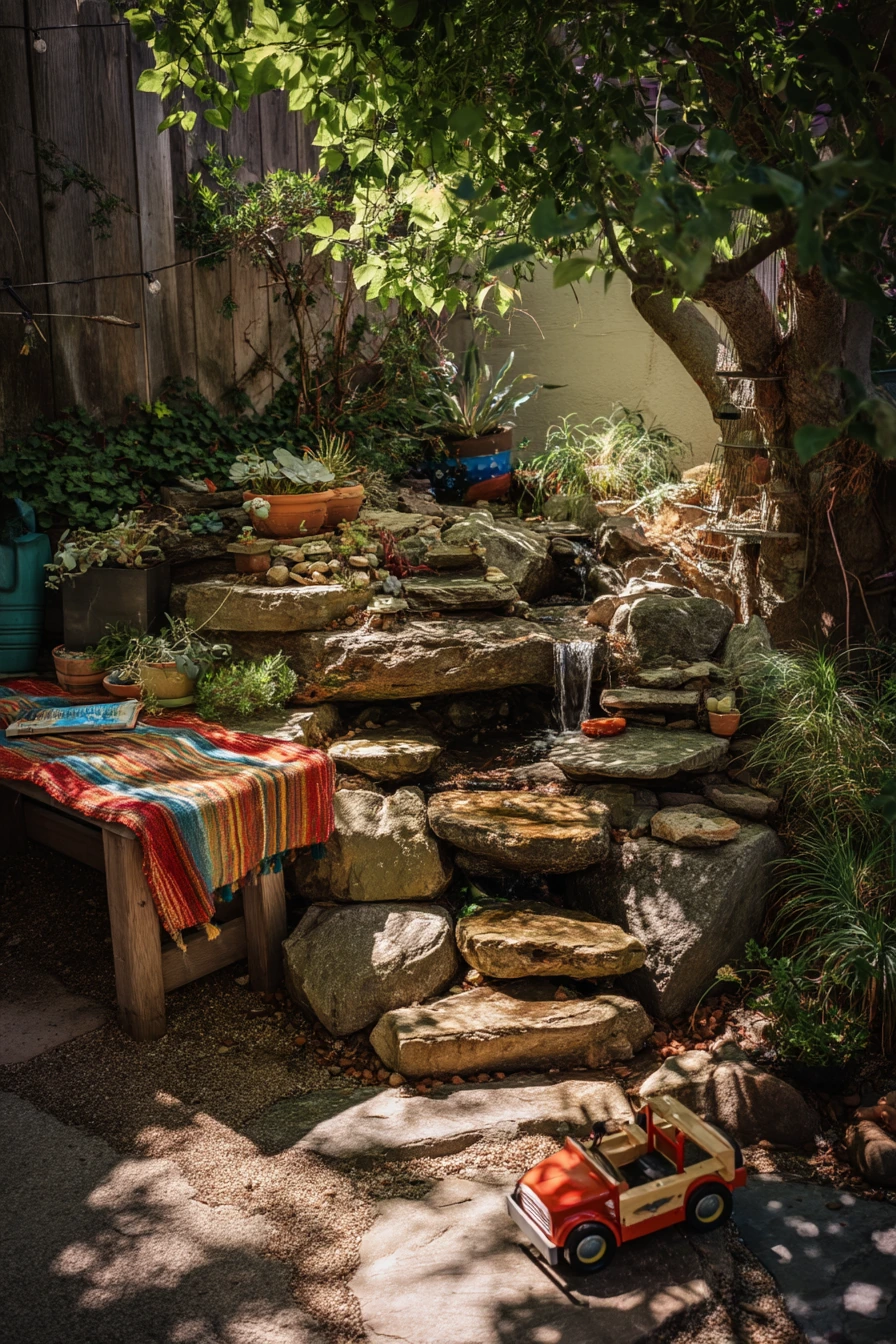
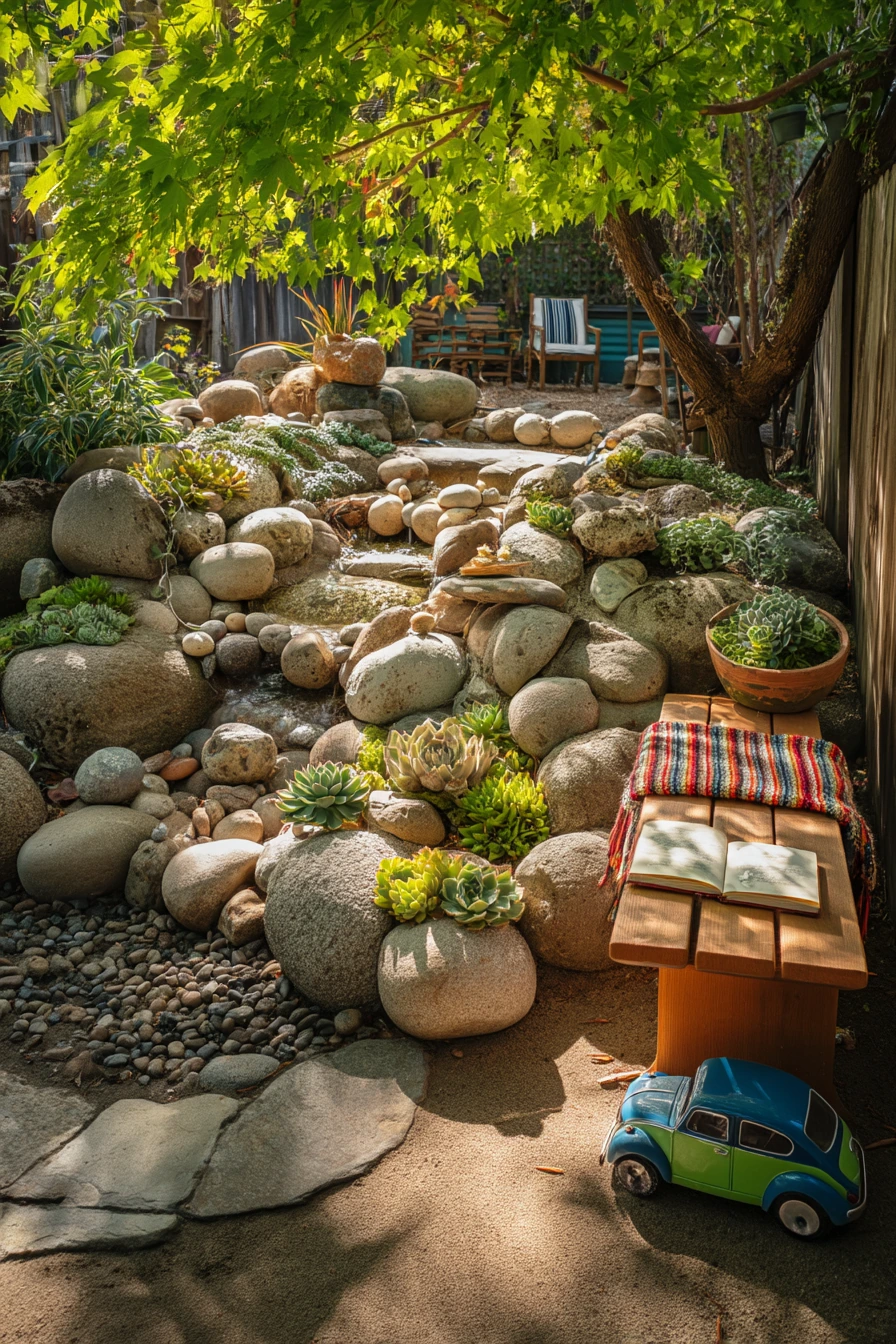
A small backyard rock garden can still feel layered if you use tiered stones. Stacking stones in short steps helps you fit more plants without needing more ground space. Succulents are a good match because they like fast-draining soil and look neat even when planted close together.
A mini waterfall makes this style stand out. You do not need a large pond. A small recirculating pump and a hidden basin under river stones can create a gentle trickle. Warm afternoon light through leafy branches makes the water sparkle, so place the water feature where it will catch light for part of the day. Add simple “life” details nearby, like a half-read gardening book on a bench, a colorful throw, or a child’s toy tucked by the rocks. These small touches make the garden feel active, not staged.
To keep it easy to care for, limit plant types. Mix 2–3 kinds of succulents with one spill-over plant that drapes over stones. Make sure each tier has a slight slope so water moves away from plant crowns. Use gravel mulch to stop splash from staining the rocks and to reduce weeds.
- Build tiers with a slight backward lean so stones stay stable over time.
- Use gritty soil mix for succulents and keep the top layer as gravel, not bark.
- Hide the pump cord under stones and run it along the edge for a clean look.
- Add one bench or small seat so people have a reason to stop and look.
- Repeat the same stone type on all tiers to make the design feel unified.
Pro Design Tip: Use one “hero” plant per tier, then fill around it with smaller succulents so the eye moves upward in a calm way.
Budget Considerations: Mini waterfall kits range widely; to save money, use a basic pump and a plastic basin covered with river stones instead of a full pond setup.


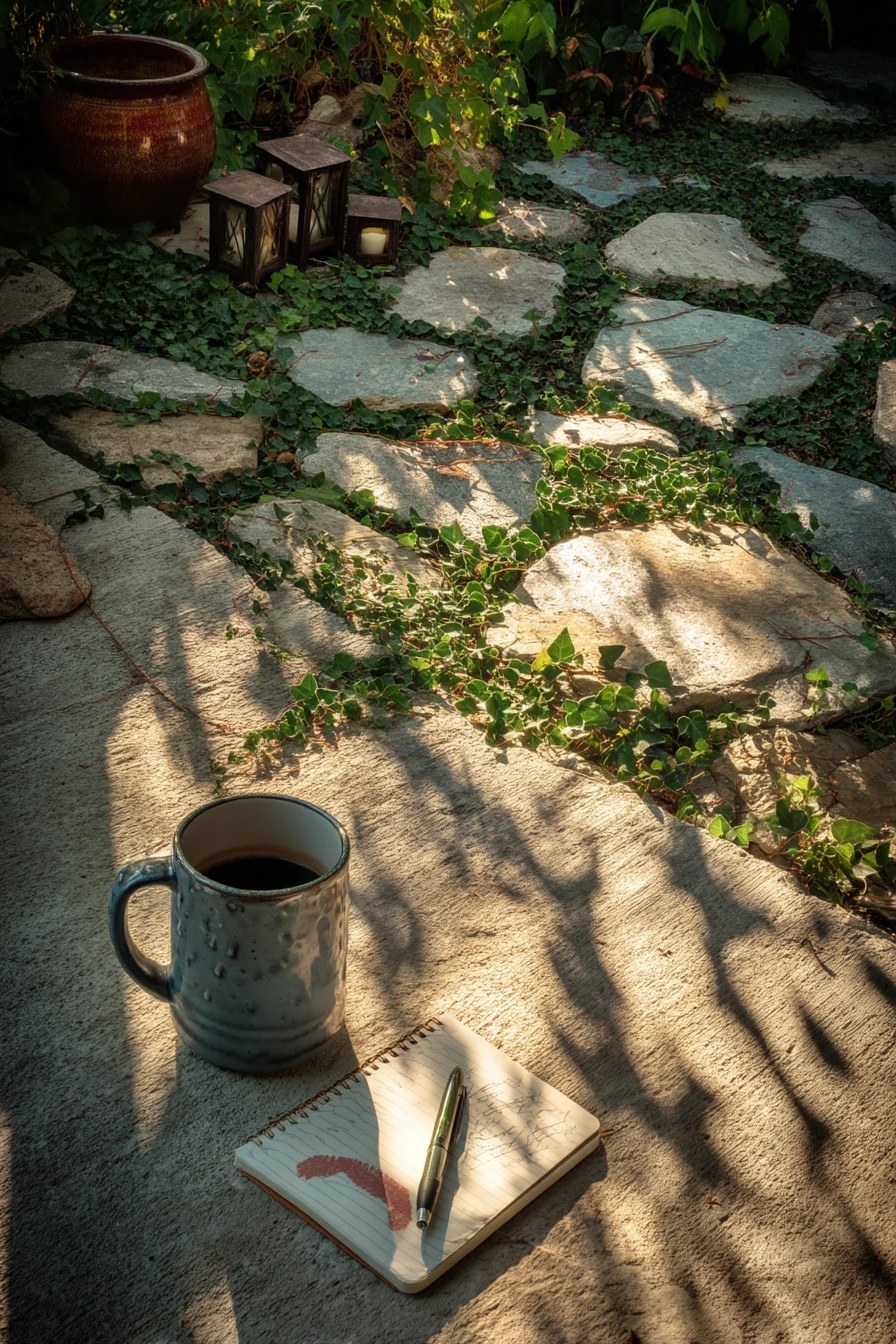
3. Rustic Rock Garden in a Stone Patio with Ivy, River Stones, and Low Lanterns


If you already have a stone patio, a rustic rock garden can fit right into the edges and corners. River stones are smooth and easy to walk near, and creeping ivy can soften hard lines. Low lanterns add a warm glow at dusk and help the patio feel like an outdoor room.
Start by choosing one patio edge to “break.” Remove a narrow strip of pavers or set aside a corner for a shallow planting bed. Add a base layer of gravel for drainage, then place larger stones to frame the bed. River stones can fill gaps and create a natural transition back to the patio tiles. Details like a ceramic coffee mug, a notebook, and plant shadows on the ground work well for styling photos, but they also show how you use the space for reading or morning coffee.
For plants, pick ivy or another creeping plant that can handle trimming. Add a few small upright plants so the bed has height, but keep them low enough to not block walking paths. Place lanterns along the edge, not in the middle, so the patio stays open. Use warm bulbs or solar lanterns for simple upkeep.
- Keep the bed shallow so it blends into the patio instead of feeling like a separate yard area.
- Use river stones to outline the bed and to reduce soil splash onto patio tiles.
- Plant ivy in controlled pockets and trim often to avoid it taking over.
- Place lanterns in a repeating rhythm, about 2–4 feet apart, for even light.
- Style a small “coffee corner” with one mug and one notebook, then keep the rest clear.
Pro Design Tip: Repeat one texture in three places (river stones, patio stone, and one matching pot) to make the whole area look planned.
Budget Considerations: Solar lanterns and river stones are usually affordable; if patio work is costly, build the rock bed in a large low planter to avoid changing pavers.

4. Compact Rock Garden Against a White Stucco Wall with Slate and Ornamental Grasses

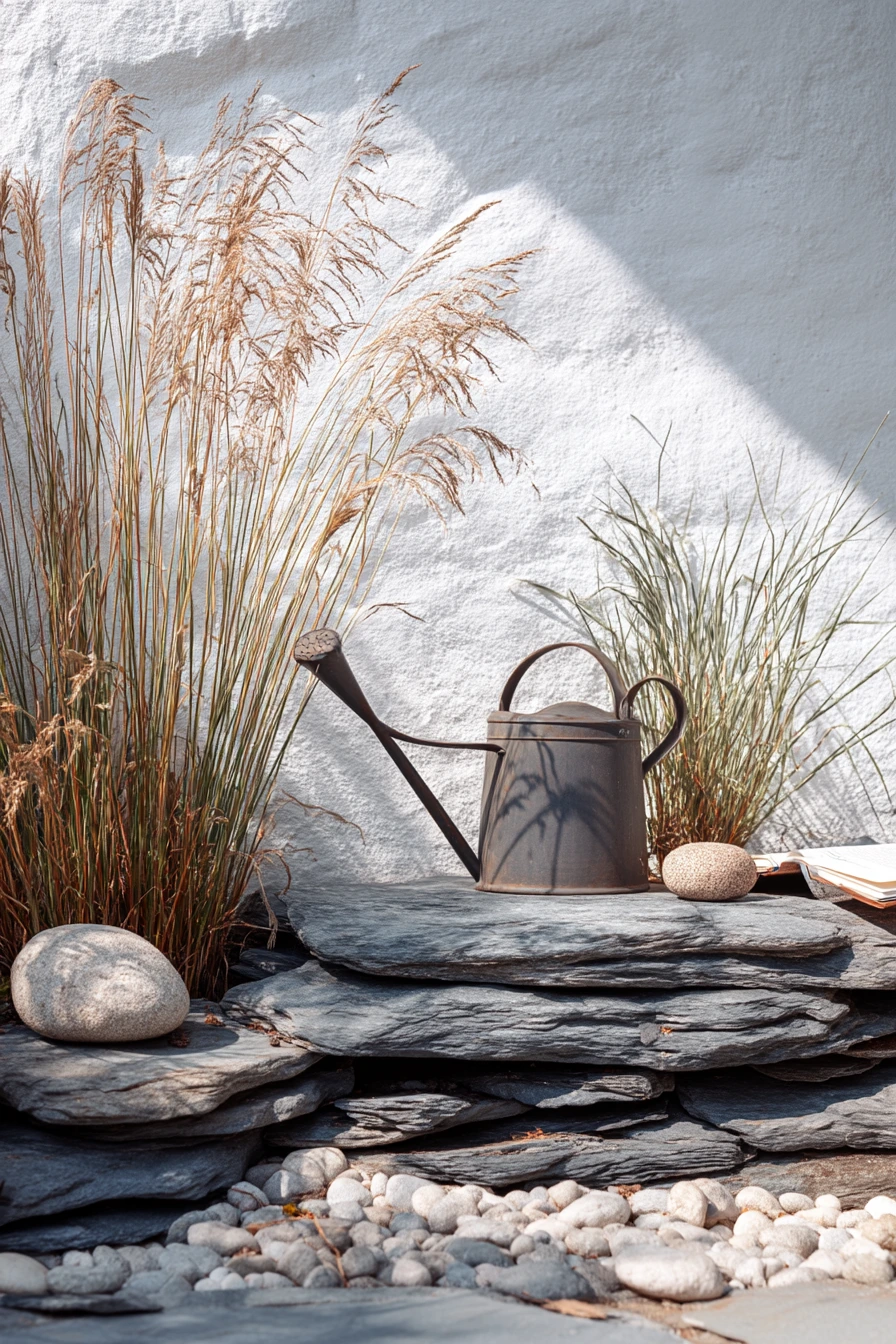
A compact rock garden against a wall is great for tight yards and side patios. A white stucco wall acts like a clean backdrop, so the stones and plants show up clearly in photos. Layered slate stones add strong lines, and ornamental grasses bring movement when the breeze blows.
To build it, start with a narrow bed that runs along the wall. Place slate in layers, like low steps, to create depth without taking up much space. Leave gaps for planting so grasses can rise between the stone lines. Keep the color palette simple: gray slate, light gravel, and green plants look crisp against white. Small props like a sleek watering can and an open sketchpad fit this style and help the space feel calm and creative. A sun-bleached towel folded on a bench works well if this is near a pool or outdoor sink.
Choose grasses that stay compact and do not need lots of water. Add one or two low shrubs for structure, and use gravel as mulch so the bed stays neat. Morning side light is ideal here, so keep taller plants away from the front edge to avoid blocking light.
- Keep the bed 18–30 inches wide for a clean, modern look along the wall.
- Use slate pieces in similar thickness so the layers look even.
- Plant grasses in groups of three for a simple repeating pattern.
- Add one small seat or stool to make the garden feel usable, not just decorative.
- Rinse gravel after installation so dust does not stain the stucco or slate.
Pro Design Tip: Leave negative space; a strip of plain gravel at the front edge makes the slate layers look sharper and more intentional.
Budget Considerations: Slate can be pricey; consider slate-look pavers or mix real slate only at the top visible layer to cut material costs.


5. Urban Terrace Rock Garden with Stacked Stones, Bamboo Screen, and Potted Ferns

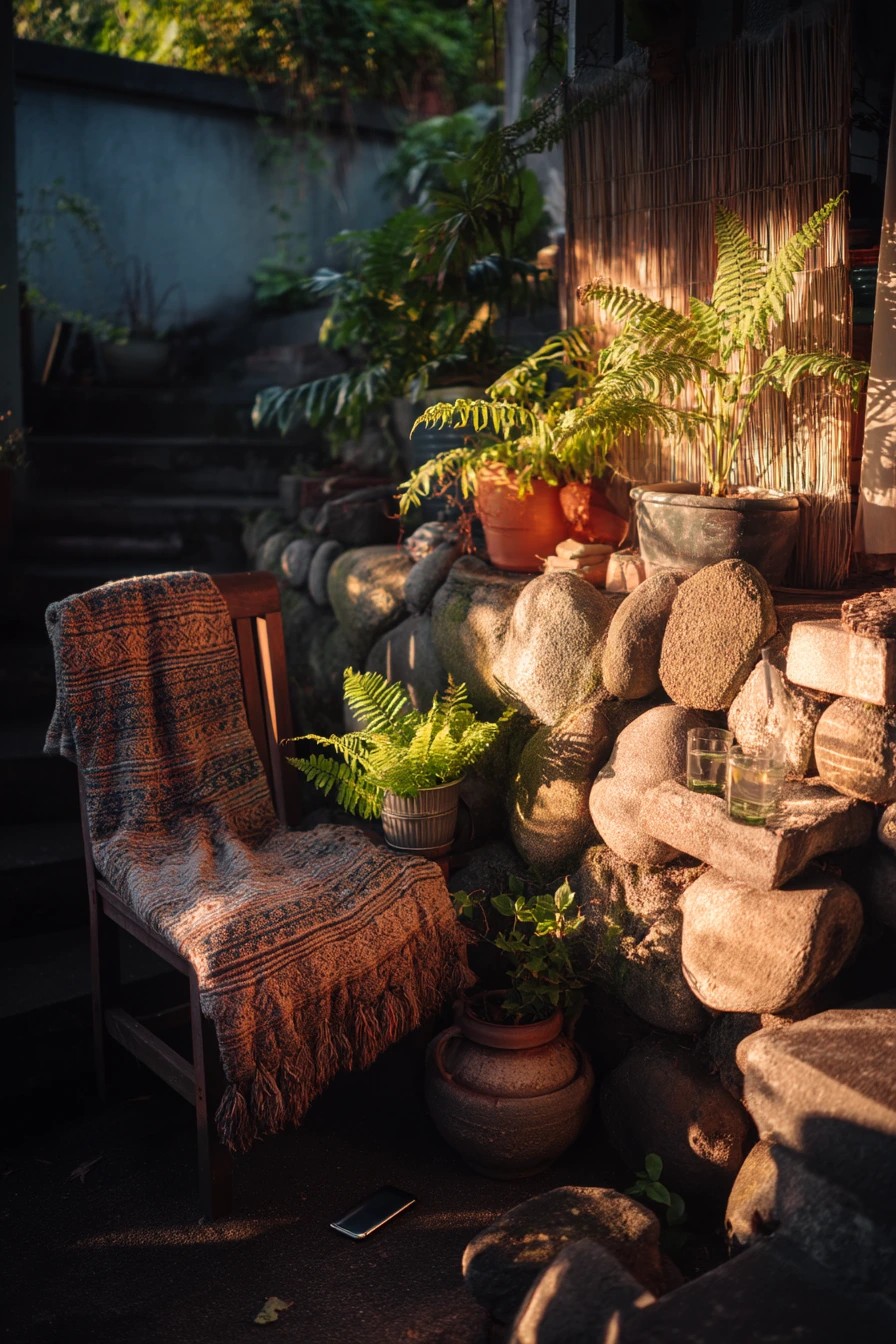
An urban terrace rock garden is perfect when you want greenery without heavy soil beds. Stacked stones create a strong base, and a small bamboo screen adds privacy without closing in the space. Potted ferns bring soft texture and do well in part shade on balconies and terraces.
Start by mapping your walking zone first, then build the rock garden along one side. Use a shallow tray or a narrow raised bed so weight stays manageable on a terrace. Stack stones in short walls or clusters, and fill in with gravel to keep it tidy. Place the bamboo screen behind the stones to hide railings and to make the plants stand out. Everyday items like a half-empty glass of water, a knitted throw on a chair, and a phone charging nearby make the terrace feel real and lived-in, which helps Pinterest visitors picture it at home.
Since terraces get wind, choose sturdy pots and heavier stones that will not shift. Use drip trays under pots to protect flooring. If your terrace gets strong sun in late afternoon, pick ferns that can handle brighter light or move them slightly back behind the screen for filtered shade.
- Use one long narrow rock area instead of many small ones to reduce clutter.
- Secure the bamboo screen to a stable frame so it does not sway in wind.
- Mix potted ferns with one upright plant for height and balance.
- Add a simple outdoor rug or mat near the seating area to soften hard surfaces.
- Keep one “clear corner” for a chair and small table so the terrace stays functional.
Pro Design Tip: Hide cords and chargers inside a weather-safe box and run them behind the bamboo screen so photos look clean and the space feels calmer.
Budget Considerations: Bamboo screens are usually low cost; if stacked stone is expensive, use lightweight faux stone panels or large river rocks grouped in tight clusters.
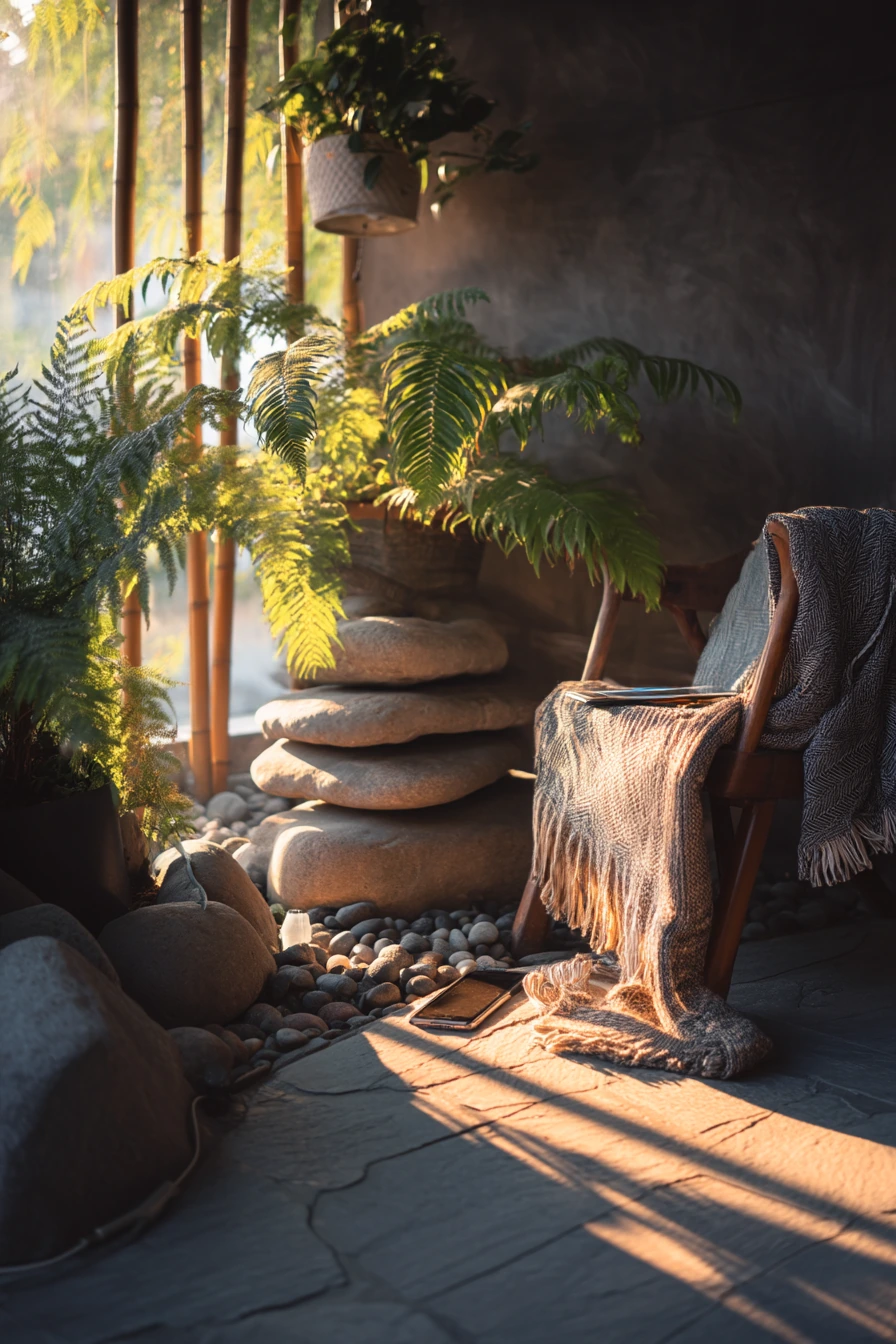

6. Shaded Backyard Rock Garden Under Trees with Moss, Ferns, and Pebbles

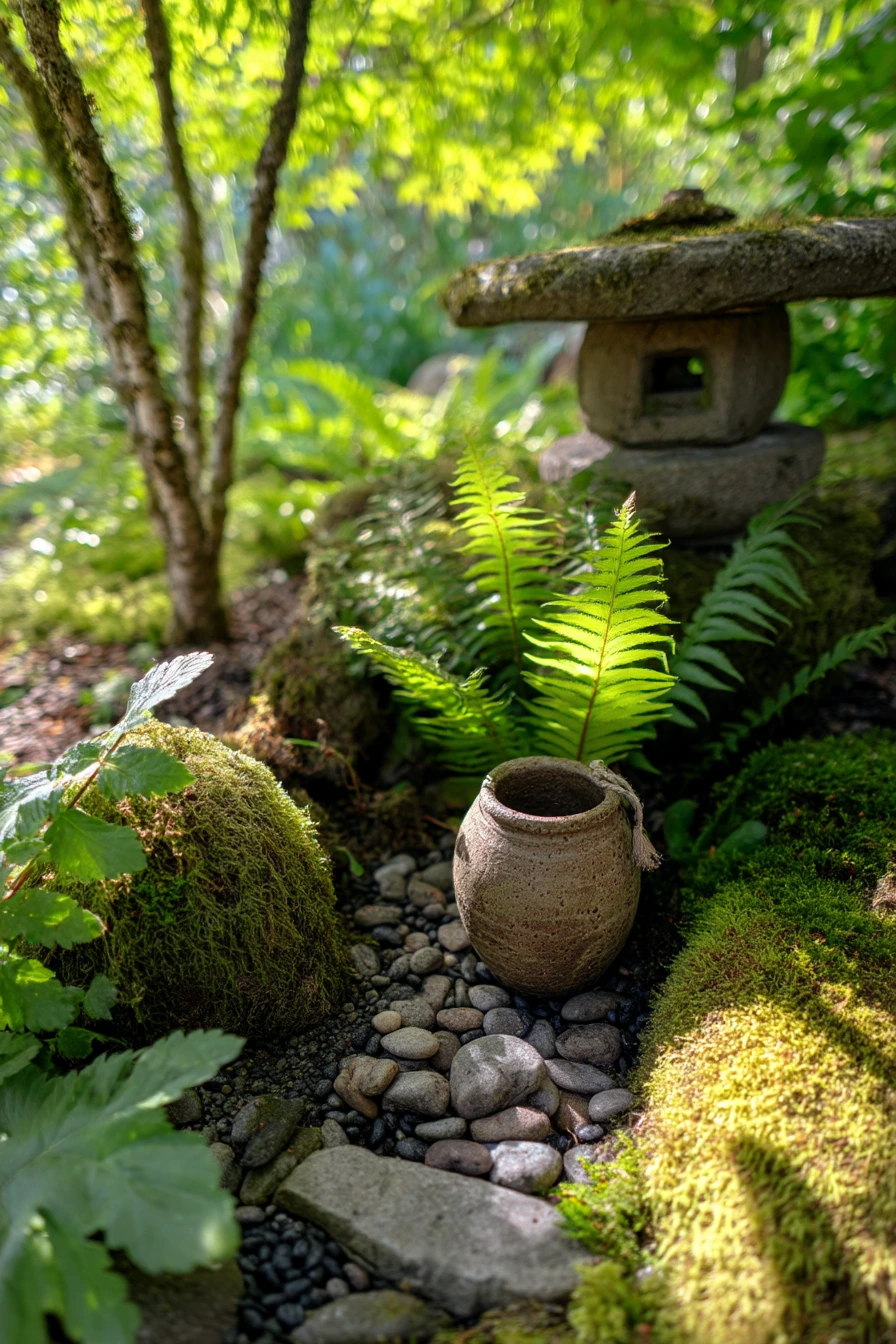
A shaded backyard rock garden under trees is a good choice if grass struggles in low light. Moss and ferns love these conditions, and pebbles help keep the area clean and easy to walk through. Dappled morning sun adds depth, so textures become the main focus.
Begin by clearing roots and leveling the area as best you can without harming the tree. Place a few larger stones first, then fill around them with mixed pebbles. Leave planting pockets where rain can reach the soil. Add a small stone lantern for a simple focal point, even if it is slightly tilted on purpose for a relaxed look. Details like a birdseed cup and a canvas gardening bag fit well in this theme because it feels like a working garden, not just decor.
Choose plants that like shade and do not need constant trimming. Ferns, moss, and small woodland groundcovers work well. Keep the edges tidy with a hidden border so pebbles do not drift into the yard. If leaves drop often, plan an easy cleanup path so you can rake without pulling up plants.
- Use larger pebbles near the surface so they do not sink into soft soil.
- Create a narrow stepping path so you can reach plants without compacting soil.
- Add one lantern or statue, not several, to keep the space quiet.
- Use shade plants in repeating groups to avoid a patchy look.
- Rake pebbles lightly once a month to remove debris and keep texture fresh.
Pro Design Tip: Place stones so they look “set” into the ground by burying the bottom third; it makes the garden look natural and stable.
Budget Considerations: Ferns can be divided and shared; ask neighbors for splits, and spend more of your budget on good edging to keep pebbles contained.


7. Zen-Style Rock Garden with Raked Gravel, Bonsai Accents, and a Water Basin
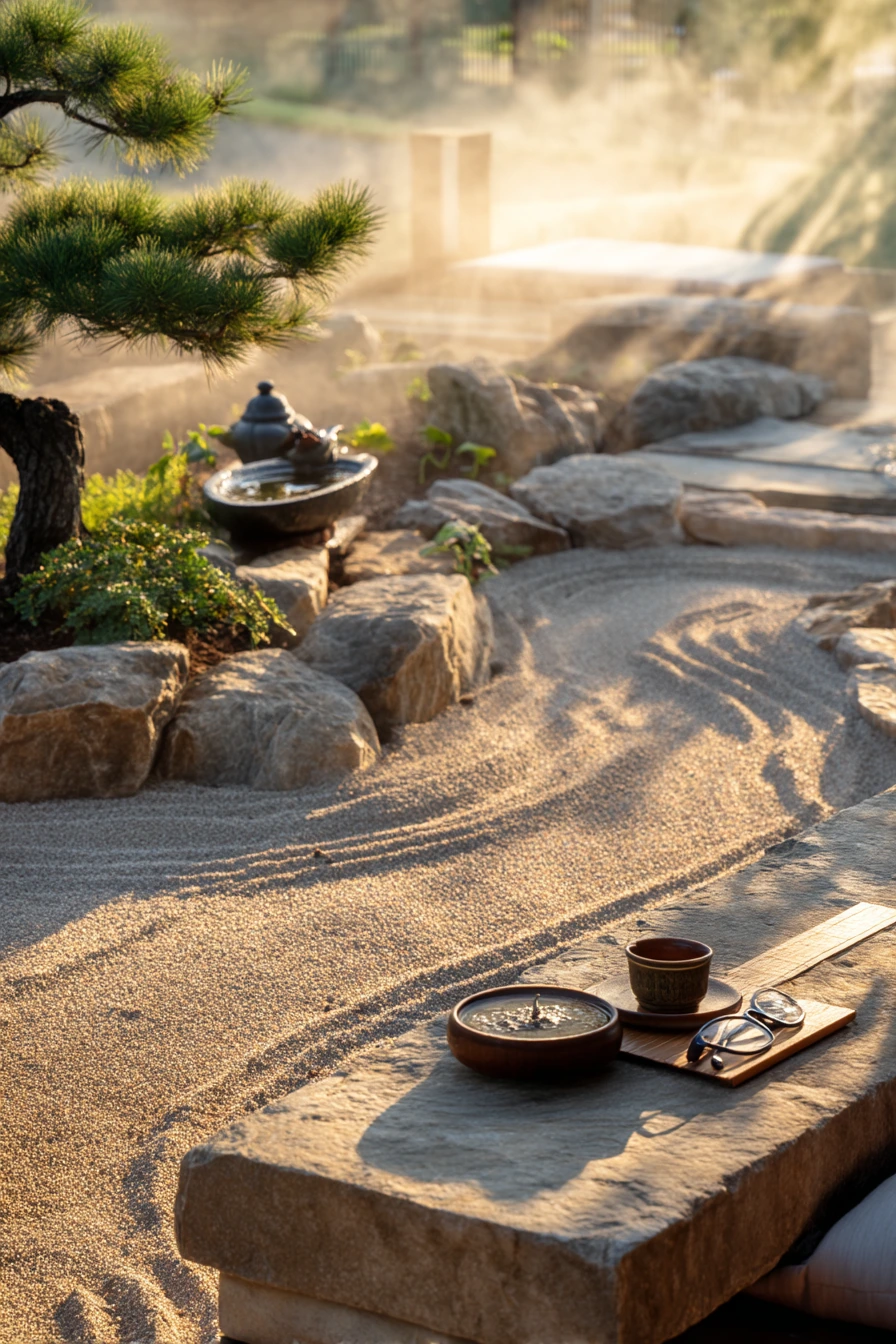

A Zen-style rock garden uses simple shapes, raked gravel, and a few special accents. Layered gravel lines create a calm pattern, and a small water basin adds a quiet sound and a place for birds to drink. Bonsai accents, even in pots, keep the look controlled and neat.
To set it up, pick a rectangular or square area and keep the edges crisp. Fill the space with fine gravel, then place a few larger stones as the main forms. Add a small bench or ledge where you can sit, read, or set down a tea cup. A tea set, reading glasses, and a soft cushion match the mood and make the garden feel like a morning ritual space. If your yard gets mist or cool air at sunrise, this style looks even more peaceful, but it still works in dry climates if you water lightly.
Raking is part of the upkeep, so plan for it. Keep plants minimal and use them as accents, not the main feature. A small bonsai and one low shrub are often enough. Place the water basin where it is easy to refill, and set it on a stable stone base so it does not wobble.
- Use a border (metal or stone) to keep gravel from spreading into nearby beds.
- Choose one gravel color and stick to it for a clean, Zen look.
- Rake patterns around stones, leaving simple open space between lines.
- Keep the plant count low and repeat the same pot style for unity.
- Place the water basin near seating so it becomes part of the daily routine.
Pro Design Tip: Use asymmetry on purpose: place the main stones off-center and vary their heights so the layout feels balanced, not stiff.
Budget Considerations: A stone water basin can be costly; use a heavy ceramic bowl on a flat rock base to get a similar look for less.


8. Quiet Corner Rock Garden with Mixed Pebbles, Moss Patches, and Small Shrubs


A rock garden tucked into a backyard corner is one of the easiest ways to start. Mixed pebbles and a few moss patches add texture without much work. Small shrubs give the garden shape and help it look full even when flowers are not blooming.
First, define the corner with a simple curve or triangle shape. Add a base of compacted soil, then layer gravel and pebbles in two tones so the surface has depth. Place a few medium stones near the front edge to frame the view. This theme pairs well with a calm routine, like stretching or journaling, so props like a journal with a pen and a partially rolled yoga mat fit naturally. If the corner sits under a pergola, soft filtered light will highlight the edges of stones and leaves.
When choosing shrubs, look for slow growers that stay small. Add one low evergreen and one flowering shrub for seasonal change, then fill gaps with moss or low groundcover. Keep the edges tight so the corner does not spill into the rest of the yard. A small hook or shelf on the pergola post can store a hand rake or gloves and keep the area tidy.
- Use two pebble sizes: smaller for fill and larger for a top layer that looks intentional.
- Create one “feature cluster” with 3 stones and one shrub as the focal point.
- Leave a small open patch of gravel for a clean resting spot for a mat or stool.
- Water shrubs deeply but less often to encourage strong roots.
- Trim shrubs lightly to keep the corner from feeling crowded.
Pro Design Tip: Make the corner look deeper by keeping the smallest pebbles in the back and larger stones toward the front edge.
Budget Considerations: Mixed pebbles can add up; buy one bulk gravel as the base and use a smaller bag of decorative pebbles only on the top layer.


9. Dry-Climate Rock Garden with Sandstone Boulders, Cacti, and Sandy Gravel
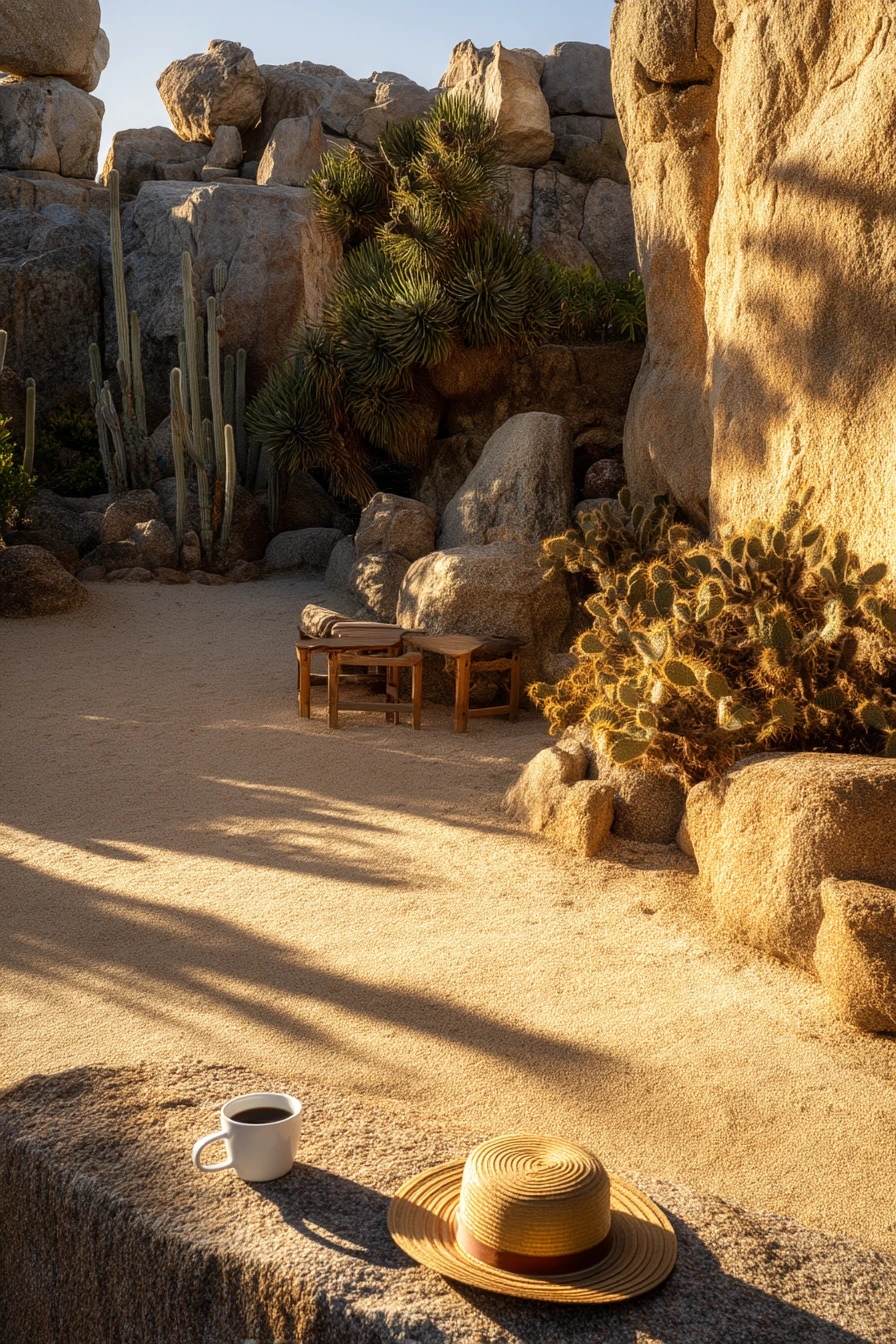

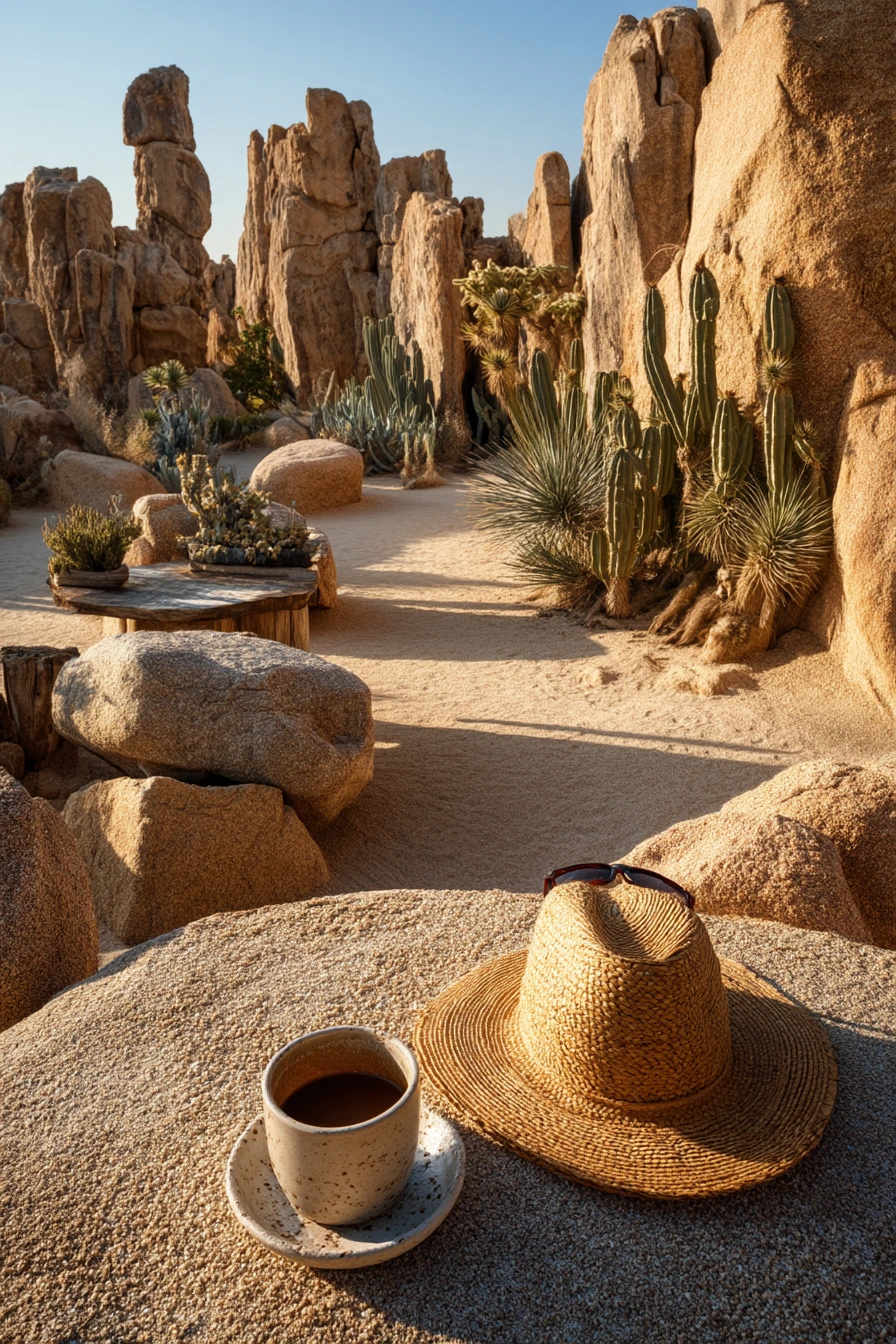
A dry-climate rock garden is built for heat and low water. Sandstone boulders give it a bold, desert look, and cactus clusters add strong shapes that photograph well in golden sun. Sandy gravel keeps drainage high and matches the natural color palette.
Start by choosing an area with full sun. Place the biggest sandstone boulders first, then step back and check the balance. You want a few main boulders, not many similar ones. Build cactus groupings around them, using space as part of the design. Add small details like a straw hat on a low stool, sunglasses on a stone edge, or a ceramic coffee cup to create a casual “hot afternoon” story. Long shadows make this style look even better, so consider how it will look in late day light.
Safety matters with cactus. Keep plants away from walkways, and leave room for growth. Use rock mulch, not bark, and avoid overwatering. If you want more color, add drought-tolerant plants like agave, aloe, or small flowering succulents. Install a simple drip line if you plan to plant more than a few specimens.
- Use sandy gravel with a small amount of crushed stone to lock it in place.
- Plant cactus in groups of 3–5 for a natural clustered look.
- Keep a clear border zone near paths to avoid accidental contact with spines.
- Add one low seat or stool for scale and for a simple styled photo spot.
- Choose boulders with similar undertones so colors feel consistent.
Pro Design Tip: Angle one boulder slightly and nest smaller rocks around it; this creates a natural “erosion” look instead of a lined-up display.
Budget Considerations: Sandstone boulders can be expensive to deliver; consider using one statement boulder and fill the rest with smaller local rock to reduce hauling costs.

10. Cozy Evening Rock Garden with Stacked Slate, Ivy, and Glowing Lanterns


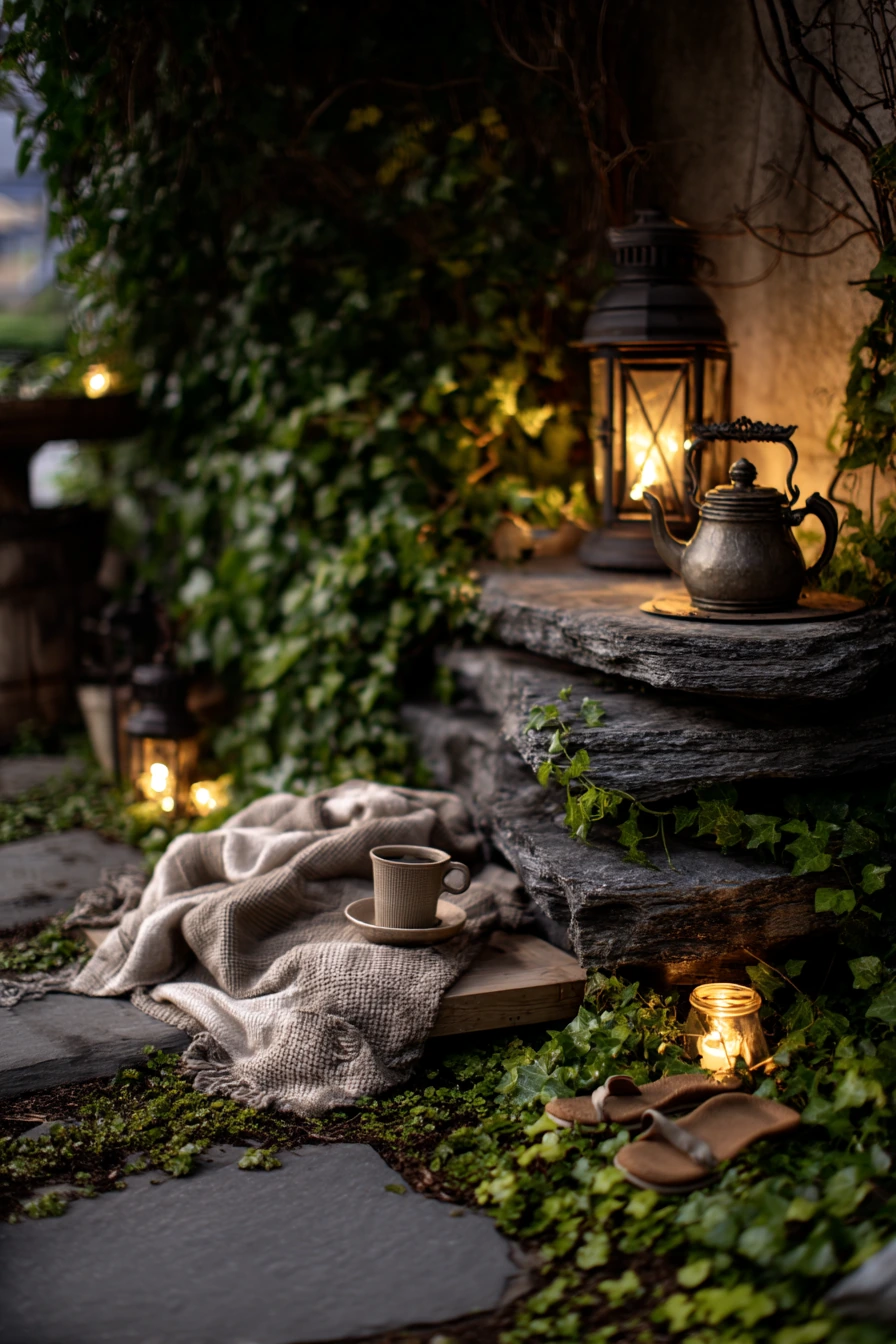
This rock garden idea is designed for evening use. Stacked slate creates a strong, dark base, and creeping ivy softens the edges. As the light fades, lanterns starting to glow turn the space into a small outdoor retreat.
Plan the layout like a short path leading to a “pause” spot. Use stacked slate to shape the bed and to create small ledges where you can place a teapot, cup, or lantern. Add gravel between slate pieces so water drains and the surface stays clean. A steaming teapot on a stone slab, a crumpled blanket, and a pair of slippers make the scene feel warm and real. If you want visitors from Pinterest to stay and read, this is the kind of setup that helps them imagine a simple nightly routine outside.
Choose ivy that you can control, or swap it for another trailing plant if you worry about spread. Place lanterns where they light the path edges, not where they shine into seating. Warm bulbs feel softer than cool white. If you have kids or pets, pick lanterns that stay stable and do not tip easily.
- Create two lighting layers: low lanterns for glow and one higher light near the door for safety.
- Use slate ledges as small “shelves” for a teapot, plant, or candle holder.
- Keep ivy trimmed away from lantern bases to reduce mess and fire risk.
- Add one soft textile, like a blanket or cushion, to balance the hard stone textures.
- Place stepping stones or a narrow gravel path so feet stay clean in the evening.
Pro Design Tip: Group lanterns in threes at different heights so the light looks layered and the garden feels deeper at night.
Budget Considerations: Battery candles and solar lanterns are low-cost options; if slate is pricey, use stacked concrete pavers and top with a few real slate pieces where they show most.

Rock garden ideas work in many spaces, from a shaded corner with moss and ferns to a sunny terrace with stacked stones and bamboo screens. The key is to pick one main style, limit plant types, and repeat the same materials so the layout looks calm and planned.
Start small, take photos as you place stones, and adjust before you plant. Once the base is set, adding touches like a bench, a teacup, a book, or soft lighting helps the garden feel like part of daily life.
FAQ
1. What is the easiest rock garden to build for beginners?
A small corner garden with gravel, three to five medium-sized rocks, and a few low-growing shrubs is an excellent choice for beginners. It requires minimal tools, is easy to maintain, and offers a simple way to explore rock garden ideas.
2. Do I need landscape fabric under a rock garden?
Landscape fabric can help reduce weed growth, especially beneath gravel paths and decorative stone areas. However, it is not essential for every garden. If you use it, cover it completely with gravel or stones for a neat appearance.
3. What plants work best in a shaded rock garden?
Ferns, moss, and shade-tolerant groundcovers are excellent choices for shaded rock gardens. Select plants that thrive in low-light conditions and prefer the moisture levels of your soil.
4. How do I keep gravel from spreading into the lawn or patio?
Install sturdy edging made from metal, stone, or durable plastic to keep gravel in place. A well-defined border separates the garden from the lawn or patio and gives the entire space a clean, organized appearance.
5. How often should I water a succulent rock garden?
Water succulents deeply but infrequently, allowing the soil to dry between watering sessions. Use well-draining, gritty soil and a layer of gravel mulch to prevent excess moisture and support healthy plant growth.
6. Are rock gardens low maintenance?
Yes, rock gardens are generally low maintenance, although they still require occasional weeding, leaf removal, and edging. They can reduce mowing and watering needs while providing an attractive outdoor feature throughout the year.
7. How can I make a small rock garden look bigger?
Use fewer plant varieties, repeat similar stones, and leave open gravel spaces to create a sense of openness. Curved pathways, layered rock arrangements, and different planting heights can also add depth and make a small garden appear larger.